

March Garden Note-Finding Forward
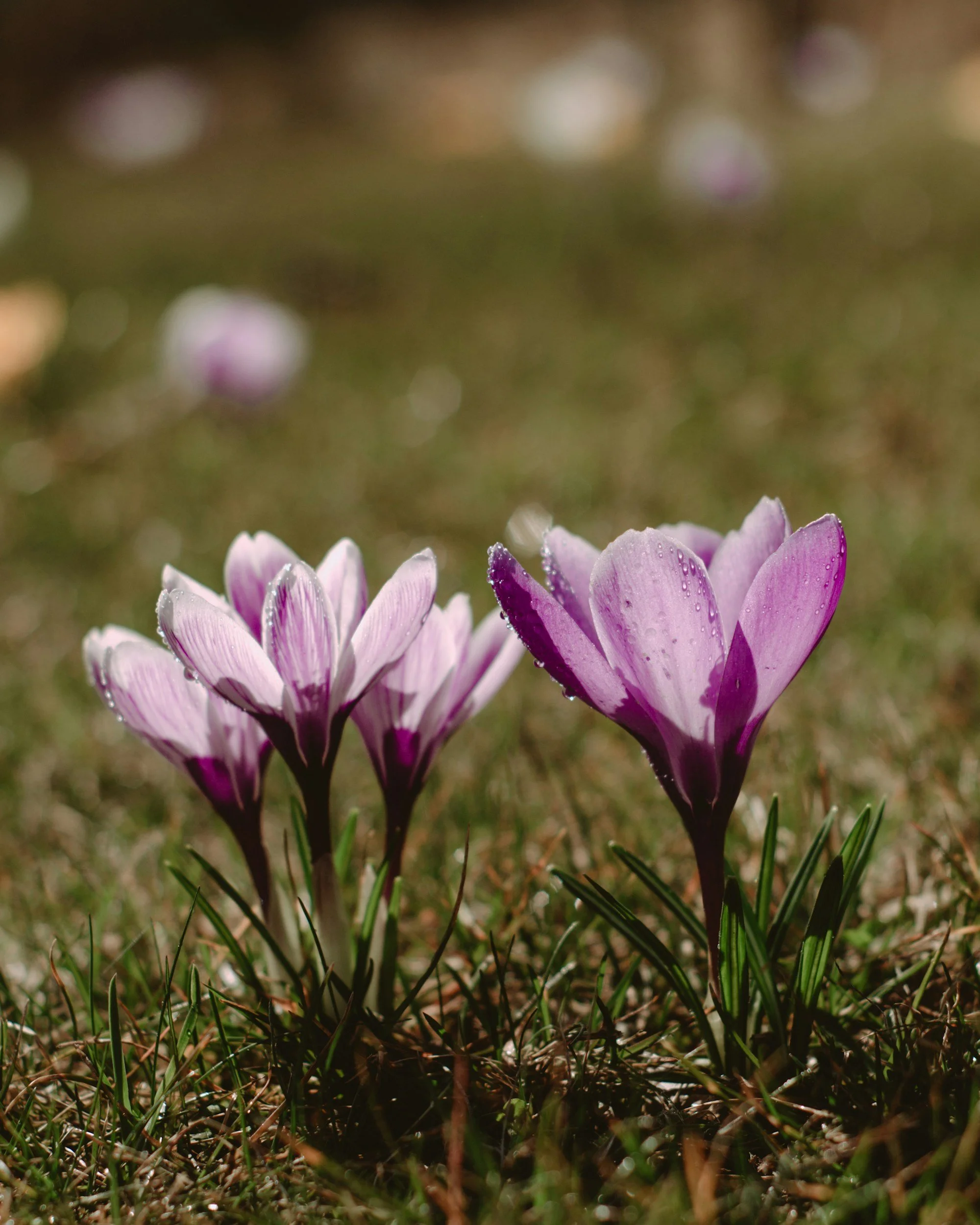
Crocus vernus
The Season That Happens Quietly
March is not an impressive month.
It doesn’t arrive with the confidence of June or the colour of April. In fact, if you were in a hurry you could walk straight through March and miss it entirely.
But that’s only if you’re paying attention.
The mornings are lighter now — noticeably so. The kind of light that creeps into the room before the alarm and makes you wonder if you forgot to close the curtains. Camellias and Magnolias have begun flowering across gardens as if winter quietly stepped aside without announcing it. Buds have appeared along branches that looked completely bare only a few weeks ago.
Even the air feels different. Still cold, but with something underneath it that suggests the season has shifted direction.
Walk through any park at the moment and you’ll see two versions of the same scene.
People rushing past — headphones on, eyes down looking at screens, thinking nothing has changed.
And then the quieter observers. The ones who stop for a moment and realise the trees are already preparing. The birds have altered their rhythm. The soil is loosening slightly after months of rain.
Nature moves forward whether anyone notices or not.
And lately I’ve been thinking about how much of life works in exactly the same way.
Real change rarely announces itself loudly.
It tends to happen quietly first — internally, gradually, sometimes invisibly to everyone except the person living through it.
Perhaps that is why March feels strangely encouraging. It reminds us that progress does not always look dramatic. Sometimes it looks like patience. Sometimes it looks like preparation. Sometimes it simply looks like continuing, even when the outcome is not yet visible.
And in a world that currently feels noisy, uncertain and constantly accelerating, there is something deeply reassuring about observing a system that continues steadily regardless.
The seasons do not follow trends.
They simply keep moving.

The Quiet Clearing of a Season
The past months have been something of a clearing.
Not dramatic. Not visible to most people. More like the way winter gradually removes what cannot continue into spring.
Certain expectations fall away.
Certain assumptions lose their weight.
Certain voices become less important than they once seemed.
And eventually the exhausting habit of trying to understand behaviour that never intended kindness in the first place.
There comes a point where analysing the past stops being useful.
You stop trying to interpret someone else’s version of events. You stop attempting to reconcile contradictions that were never meant to make sense.
What replaces that isn’t bitterness.
It’s clarity.
Clarity has a way of returning energy to the present moment. It frees your attention from endless analysis and places it back where it belongs — in the life still unfolding ahead.
Ecclesiastes speaks about seasons with remarkable honesty: a time to plant and a time to uproot. Often both are happening at once.
Something new beginning while something else is quietly removed.
Isaiah says something equally direct:
“Forget the former things; do not dwell on the past. See, I am doing a new thing.”
Not pretending the past never existed.
Simply choosing not to remain there.
For many people, that moment arrives quietly — not through dramatic declarations but through the calm recognition that life must move forward.
And strangely enough, that recognition can feel like relief.
When the Body Responds to Life
Modern medicine has begun exploring something many people sensed long before research confirmed it: the body and mind are not separate systems.
They are deeply connected.
The field of psychoneuroimmunology examines the interaction between psychological stress, the nervous system, hormones and immune response. Increasing research shows that prolonged stress — especially the kind associated with sustained emotional strain or unstable environments — can influence inflammatory processes and immune balance.
The body responds to its surroundings constantly.
Not just physical surroundings like air or diet, but relational environments, psychological pressure and chronic uncertainty.
Many people begin exploring this connection only after experiencing health challenges that appear difficult to explain through a single diagnosis alone. I’ve certainly found myself paying closer attention to these connections over the past year — not in a way that turns health into a personal drama, but in a way that encourages deeper curiosity about how human beings actually function.
The body keeps remarkably honest records.
When something in life becomes unsustainable and or harmful, eventually the body asks for attention.
Not as punishment — simply as information.
Understanding this does not mean pretending that difficult environments or harmful behaviour have no cause or consequence.
In fact, recognising the connection between emotional environments and physical health can bring a different kind of clarity. Prolonged exposure to dishonesty, manipulation, or environments where a person’s sense of reality is repeatedly questioned can place enormous strain on the nervous system. Psychoneuroimmunology research increasingly shows that sustained relational stress can influence inflammatory processes and immune function over time.
Acknowledging this isn’t about living in blame — but it is about recognising patterns honestly. Without that recognition people can spend years believing narratives that were never true, internalising responsibility for dynamics they did not create. Many individuals carry the physiological effects of these environments without ever realising the connection.
Understanding the relationship between environment and health can therefore be freeing. It allows a person to choose differently. To step out of spaces where the atmosphere constricts the spirit and into places where there is light, steadiness and room to grow.
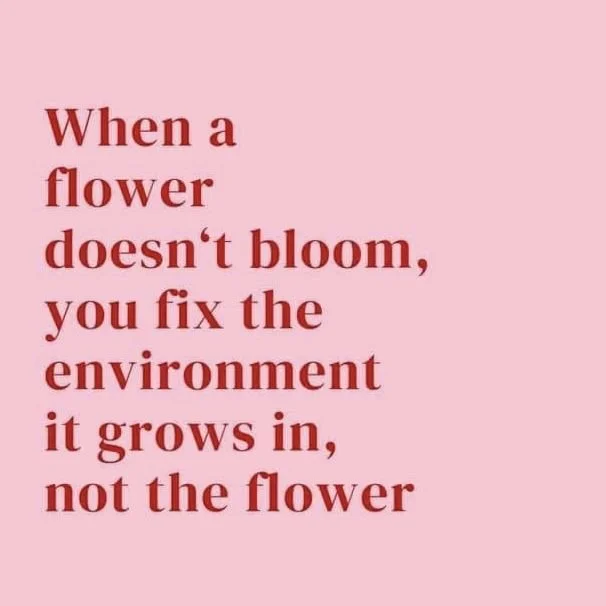
The well-known gardening observation captures it perfectly: ‘when a flower struggles to bloom, we do not attempt to repair the flower itself — we examine the conditions in which it has been asked to grow’.
Sometimes healing begins simply by standing where the light can reach you.

Science, Creation and the Question of Order
One of the interesting misconceptions about science is the idea that it automatically removes belief in God.
Historically, many of the scientists responsible for shaping modern scientific understanding believed the opposite.
Isaac Newton, whose work transformed physics, wrote extensively about his belief in a creator behind the order of the universe. Johannes Kepler, one of the founders of astronomy, described his work as “thinking God’s thoughts after Him.” Even Albert Einstein, though not traditionally religious, often spoke about the profound sense of order and intelligence embedded within the laws of nature.
The more these scientists studied the universe, the more they recognised patterns, consistency and mathematical precision woven into it.
Spend enough time observing ecosystems, plant physiology and the astonishing complexity of natural systems, and that sense of order becomes difficult to ignore.
Personally, faith has never felt like something separate from nature.
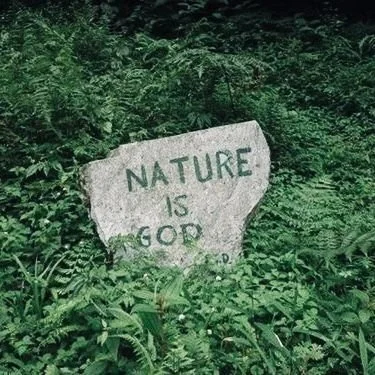
If anything, nature reinforces it.
Romans 1:20 suggests that the nature of God can be understood through creation itself — through what has been made.
And when you spend time studying plants, soil, seasons and ecological relationships, the idea that all of this exists purely by accident becomes harder to believe.
There is structure.
There is rhythm.
There is intelligence.
It is also why many of the most effective health practices remain surprisingly simple. Movement strengthens the body. Time in nature restores the mind. Herbs support the body’s natural systems.
In other words: movement is medicine, nature is medicine, and plants have been medicine long before modern pharmacology existed.
Herbal medicine works within this same logic. Rather than forcing the body into a particular state, plants tend to support the body’s own regulatory systems — digestion, immunity, circulation and nervous system resilience.
Studying herbal medicine alongside exercise science and public health makes this intersection even clearer.
The principles are not competing.
They are reinforcing each other.
A Culture Full of Ideas
Another noticeable feature of the present moment is how quickly ideas circulate.
The world feels unusually loud at the moment — conflict spoken about almost casually, information arriving faster than wisdom, artificial certainty replacing thoughtful conversation. Ideas travel quickly now. Spiritual language too. Ancient practices repeated without understanding origins, meaning, or consequence. Trends appear, gather followers, and disappear again before anyone asks deeper questions.
I find myself stepping back from much of it.
Not out of superiority.
Simply preservation.
There is a difference between disengagement and discernment. One withdraws from people; the other protects clarity. Increasingly, discernment feels less like judgement and more like maintenance of inner equilibrium — choosing carefully what shapes thought, attention and belief.
Most of this isn’t malicious.
It reflects a wider search for meaning.
People are looking for something steady in a world that often feels unstable.
Personally, I’ve found that steadiness in places that are much quieter.
The natural world.
Honest conversations.
And faith that doesn’t require performance.
I believe in God.
I’m not religious in the institutional sense, and the two are often confused. Faith, to me, feels less like public declaration and more like recognising patterns that already exist within creation.
Spend enough time observing the natural world and you begin to see that truth does not usually shout.
It tends to reveal itself quietly to those willing to pay attention.
Environment Matters
One of the simplest principles in gardening is also one of the most profound.
When a flower fails to bloom, we don’t blame the flower.
We change the conditions in which it grows.
Light.
Soil.
Water.
Space.
Human beings respond to environment in remarkably similar ways.
The atmosphere we live within — conversations, expectations, the presence or absence of kindness — shapes how people think, create and even how their bodies function.
Sometimes growth becomes possible simply by recognising that a different environment is needed.
Not through resentment.
Through understanding.
And when that shift happens, something interesting occurs.
Energy returns.
Perspective sharpens.
Ideas begin appearing again.
The Work That Continues
The Wild Remedy was never intended to follow trends or create an image of nature.
It began because real people needed real connection — with the natural world, with creativity, and with each other.
Over time that has taken many forms.
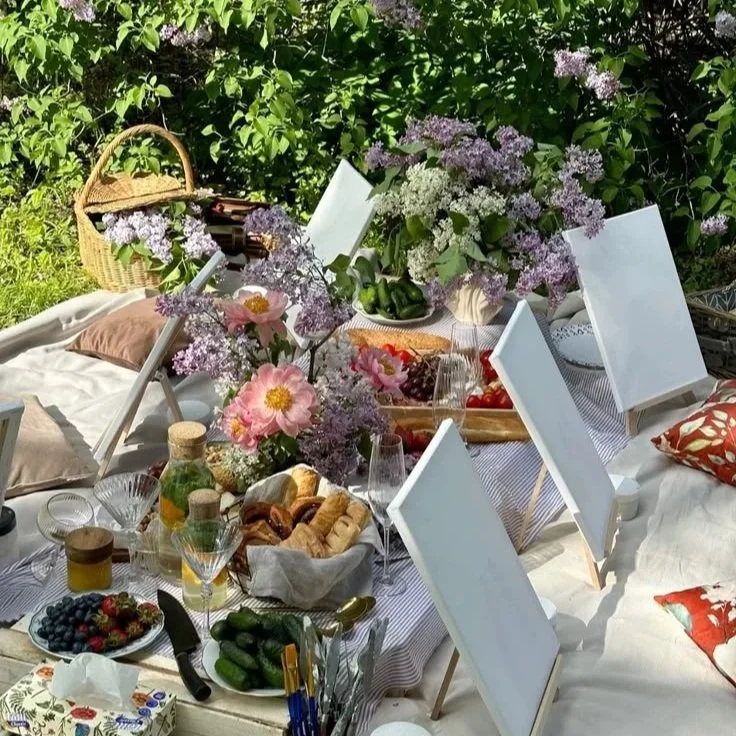
Nature-based workshops where people gather to work with plants, herbs and natural materials. Community collaborations where creativity and nature support wellbeing and confidence. Corporate and educational events where people step away from screens long enough to reconnect with something tangible.
Alongside this, a growing part of the work we do includes referral-based support for individuals and small groups who benefit from more personalised guidance — offering 1:1 sessions and group work through horticultural and ecotherapy, where time with plants and the natural environment and creative activities becomes a practical and gentle way to support wellbeing, recovery and confidence.
Increasingly the work also includes helping people shape outdoor spaces more thoughtfully.
Garden planning and coaching.
Planting schemes designed with both wellbeing and biodiversity in mind.
Spaces that are restorative or food source rather than purely decorative.
Sometimes that means redesigning a garden.
Sometimes it means helping someone transform a small balcony into a place filled with herbs and pollinator-friendly plants.
Nature doesn’t require grand landscapes.
It works perfectly well in small intentional spaces.
Alongside this, The Wild Remedy continues creating natural products designed to bring some of that same calm into everyday life — botanical blends and preparations made with respect for both the plants and the people using them.
And gradually a thoughtful community has formed around these ideas.
The Wild Circle exists for those who want to keep exploring — sharing seasonal knowledge, herbal learning and the quieter conversations that rarely fit into the pace of modern life.
Writing What Comes Next
There is a passage in the book of Habakkuk that says:
“Write the vision and make it plain.”
Not as manifestation.
Not as demanding outcomes.
But as clarity.
Knowing where you are heading even if the full path hasn’t yet revealed itself.
March feels a little like that.
A threshold.
Not the finished chapter, but the moment where direction begins to appear.
March in the Garden
Gardens in March are quietly active places.
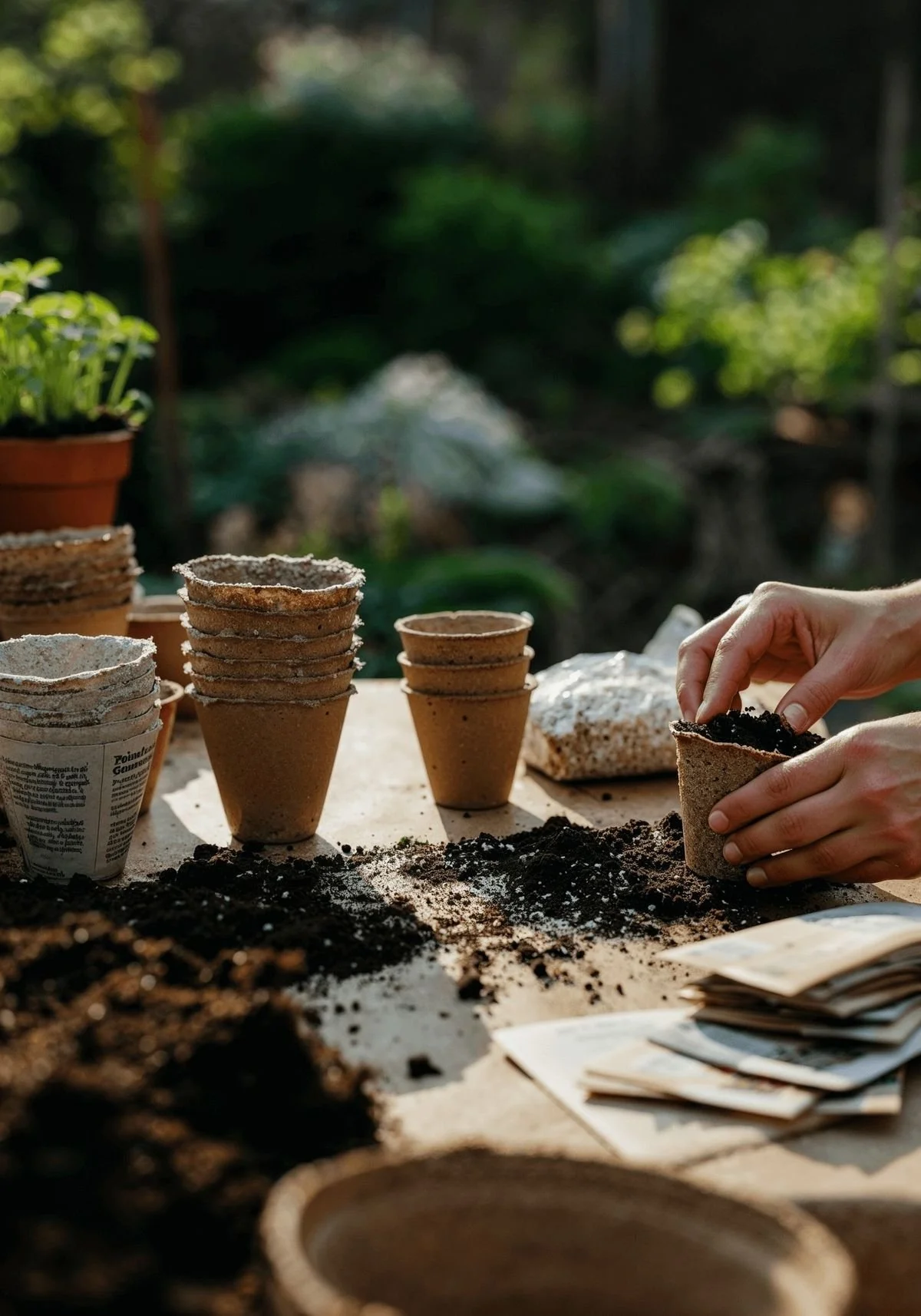
Much of the activity is subtle, but there are many gentle tasks to begin:
• sow chamomile, calendula and cosmos indoors
• start hardy herbs such as parsley, coriander and dill
• divide mint and lemon balm before spring growth accelerates
• refresh containers with compost
• lightly prune winter-damaged rosemary and sage
• begin planning pollinator-friendly planting
Even a windowsill can become a small medicinal garden.
Herbs rarely demand perfection.
Only light, patience and care.
For the Wild Circle
Inside theWild Circle this month, members will receive a guide to preparing a seasonal spring herbal infusion designed to support the transition from winter into the growing season.
Alongside herbal learning, members receive early access to new creations, seasonal garden notes and invitations to upcoming workshops and collaborations.
A small community built around curiosity, nature and honest conversation.
Looking Forward
March sits at an interesting point in the year — spring by the calendar, but still carrying traces of winter in the air.
But unmistakably moving toward light.
The buds already know it.
The birds know it.
And perhaps people sense it too.
Because long before visible change appears, something within life has already begun preparing for what comes next.
The important thing is simply to keep moving forward.
With integrity.
With curiosity.
And with the quiet confidence that new seasons arrive exactly when they are ready.
References & Influences
Bible — Ecclesiastes 3; Isaiah 43:18–19; Habakkuk 2:2; Romans 1:20
McEwen, B. Stress & immune regulation research
Psychoneuroimmunology — Nature Reviews Immunology
Axe, J. Functional medicine discussions on inflammation & immune health