

Nutrition, Noise & Nourishment – Learning to Listen to Our Bodies and Our Hearts
The more I study herbal medicine, the more I realise that the modern conversation around health has become overwhelmingly noisy. Everywhere we turn, there’s someone telling us what’s “good” for us — a new superfood, supplement, or lifestyle hack that promises balance, beauty, and longevity. Yet, for many, this constant stream of advice only creates more confusion.
Through my current studies in herbal medicine, I’ve been revisiting these questions with fresh eyes. It’s not entirely new territory for me — my earlier degree included nutrition, exercise science and public health, and I’ve always been fascinated by not only the science of exercise but also how what we eat and how we live shapes our wellbeing. But what I’m learning now compliments this — but more holistic, more connected to nature and the human spirit. I’m seeing even more how fragmented our understanding of health has become, and how easily we’ve lost touch with the quiet wisdom of the body and the natural world.
I’m not here to offer quick answers or definitive “rules” — but rather an invitation to slow down, think deeply, and perhaps begin to ask better questions.
Why the noise feels so loud
We live in an age where wellness has become an industry — and with that comes confusion. One day something is hailed as a miracle; the next, it’s condemned. Many “clean” supplements, when examined closely, turn out to be synthetic compounds made in laboratories, mimicking the chemistry of plants rather than being extracted from them. That doesn’t make them inherently bad — but it does mean they aren’t always what they claim to be.
We need to ask: How do we really know what’s good for us? What methods and measures are used to determine whether a food, nutrient, or herb supports health? And how can we navigate a world where science, marketing, and tradition often pull us in different directions?
How do we know what’s ‘good’ for us?
In truth, much of what we’re told about nutrition and supplements is based on selective evidence. Research often follows money — funded by industries with products to sell. Studies can be short-term, focused on isolated compounds, and rarely account for the complex ecosystem that is the human body.
The scientific models used to “prove” health benefits — like randomised controlled trials, biochemical markers, or population studies — each have their value, but they’re limited in scope. They don’t always reflect the whole person or the lived reality of wellbeing.
Traditional herbal medicine, on the other hand, draws from thousands of years of human experience — people observing how plants interact with the body and spirit, season after season, generation after generation. Modern science is only beginning to catch up with what indigenous and ancestral cultures have long known: that the body, mind, and nature are not separate entities.
The truth lies somewhere in between. As I’m learning through my training, we must triangulate — bringing together evidence from modern science, traditional knowledge, and our own lived experience.
Listening to the body’s intelligence
Barbara O’Neill once said something that I keep coming back to: we shouldn’t take something that the body already synthesises itself, because the body recognises it as surplus. In other words, when we keep supplementing what our body naturally produces, it can become complacent and slow down its own functions.
A good example of this is the rise of collagen supplements — promoted everywhere as the secret to youthful skin and healthy joints. Yet our bodies are already capable of producing collagen through fibroblast cells, which rely on amino acids (from protein), vitamin C, copper, and other nutrients. When we create the conditions for production — rather than flooding the body with external sources — we work with our biology, not against it.
Some natural ingredients, like Tremella fuciformis (also known as the snow mushroom), are being studied for their potential to support skin hydration and stimulate collagen pathways -though rigorous human clinical trials are still limited, (I share this not as a claim, but as a thread worth investigating).
It’s not a prescription or a quick fix — but an example of how nature offers intelligent support when we take time to understand it.
This gentle balance between what we add and what we allow our bodies to do for themselves feels key to true nourishment.
The gut, the mind, and emotional health
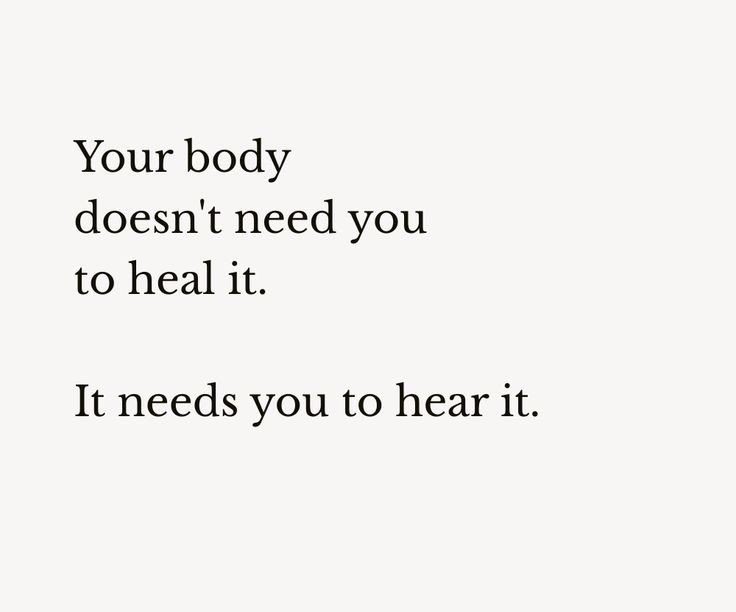
One of the most profound lessons in both herbal medicine and nutritional science and exercise science is that the gut and brain are in constant conversation. Around 90% of our serotonin — our “feel-good” neurotransmitter — is produced in the gut.
That means our activity levels, what we eat, how we digest, and the balance of our gut microbiome directly affects our mood, sleep, and emotional resilience. Conversely, stress, trauma, and anxiety can disrupt digestion, change our microbiome, and cause inflammation. It’s a two-way dialogue that modern medicine is only beginning to fully appreciate.
True healing must address both. You can’t nourish emotional health without caring for your digestion, and you can’t restore gut health while living in chronic stress. It can feel like a vicious cycle when we don’t understand how intertwined it all is — but when we start tending to both, in simple daily ways, we begin to see real balance return.
And of course, just as every garden has its own ecosystem, every body is different. What soothes one person may not suit another. This is why herbal medicine is so beautifully personal — it’s not about “one size fits all,” but about learning the language of your own body and responding to its cues.
The influence of image and the illusion of wellness
Online, we’re surrounded by polished versions of “natural living.” It can be easy to feel inadequate when influencers promote health and beauty routines while quietly relying on injectables, enhancements or filters. There’s no judgement here — but it does remind us that authenticity matters.
Our purpose isn’t just what we do — it’s what our actions and choices do to others.
We all have influence, however small. The more honest we are about what health truly looks like — messy, seasonal, cyclical — the more we help others reconnect to something real.
At the cellular level
Health begins at the smallest scale. Dr Josh Axe often talks about wellness at the cellular level, describing each cell as a tiny ecosystem that thrives when given light, hydration, nutrients, and rest.
This resonates deeply with herbal medicine — because plants, too, are living systems that teach us how to restore balance rather than control it.
And then there’s Dr Mindy Pelz, whose work I find deeply inspiring — particularly her focus on women’s hormones and how much of medical research historically ignored the female body. For too long, “evidence-based” models have been built on the physiology of men, with women’s natural rhythms seen as inconvenient variables.
It’s no wonder so many women feel unseen in modern health advice. Herbal medicine, by contrast, recognises cycles — lunar, seasonal, and hormonal — as sacred rhythms that guide how we live and heal.
Ethics, sourcing, and sustainability
As my studies continue, one area that’s sparked deep discussion among herbal students is where our plant ingredients come from. So many popular herbs — turmeric, maca, ashwagandha, frankincense — are being mass-farmed to meet global demand.
This industrialisation of “natural” medicine is a contradiction in itself. If the way we source healing plants damages the very ecosystems that sustain us, then we’ve lost our way.
At The Wild Remedy, we remain committed to small-batch, sustainable production — not just because it’s better for the planet, but because it honours the spirit of the plants themselves. True wellness can’t come at the cost of the Earth.
Education and empowerment
Something that’s become clearer to me is how disconnected our understanding of health and the body is from early education. Imagine if schools taught children not just to memorise anatomy diagrams, but to truly understand how the body functions — how soil health links to food quality, how gut health shapes mood, how movement supports emotional resilience.
There is some good practice out there, but there’s still a long way to go at all levels of the current system.
As a Physical Education practitioner and ex Public Health Commissioner, I’ve spent years writing policy and trying to move beyond the traditional model of sport and competition by redesigning the traditional curriculum and assessment models— to foster a love of movement first as a form of self-expression and emotional care. I’ve seen how transformative it can be when children discover that movement isn’t about performance or comparison — it’s about joy, freedom, and connection to the body.
But this shift needs to happen systemically not just in isolated classrooms and including all sectors and industries. If we can teach children that movement is medicine, that food is nourishment, and that their bodies are wise — we begin to change the story of health for future generations.
Where we are now — and why this matters
We are in an era where health has become commercialised and information is both abundant and conflicting. It’s no wonder so many feel anxious or paralysed about what to eat, what to take, or how to live well.
If you find yourself feeling that way, take heart. Start small. Choose curiosity over confusion. Learn to ask why. And remember that health is not a checklist — it’s a relationship, built over time, between your body, your mind, and the world around you.
Our emotional and physical wellbeing are not separate. The body listens, always. It remembers what we feed it, how we speak to it, and how we care for it.
A note for this season
As the days shorten and autumn deepens, I’m reminded how the Earth naturally slows — resting, composting, preparing for what’s next. There’s a quiet beauty in that rhythm, and perhaps it’s one we’re meant to follow too.
This month also marks World Mental Health Day, a gentle reminder to check in — with yourself and with others. If you’re feeling low, know that even simple natural acts can lift the spirit: a morning walk, diffusing rosemary or citrus oils, journalling, nourishing meals, prayer, or mindful rest.
You’re not alone in this. Nature heals quietly, and sometimes, we just need to pause long enough to hear it.
Where I am now
I’m still learning, still asking questions, still finding where my particular path will lead within the world of herbal medicine. Some areas are already calling — rooted in my own experiences and of helping others improve their health, body, and mind. But I trust that clarity will come as I keep learning, growing, and listening. I’m also deeply grateful to the friends and family who’ve so kindly offered to be part of my learning — willing participants in this journey of herbal practice and discovery — whose trust and feedback are helping me grow in both confidence and understanding.
If this journal resonated with you, you’re warmly invited to join our Wild Circle — a space where we share seasonal wisdom, reflections, recipes, and our natural handmade products crafted to nourish skin and spirit.
We’re also preparing for the Christmas markets, and our shop is slowly filling with new candles, botanical sprays, and herbal creations inspired by my studies and our community’s journey.
You can explore or connect with us at thewildremedy.org, or reach out directly at info@thewildremedy.org if you’d like to collaborate, order, or enquire about workshops and events.
And on a lighter, hopeful note — our ongoing search for The Wild Remedy home continues. A huge, heartfelt thank you to the farmers and land owners who have reached out, to share their land, and taken the time to explore how our vision might take root alongside theirs. These conversations of possibility mean the world, and they remind me that the right place often finds you when you’re patient enough to keep listening.
And to a dear friend who connected us to this growing network — you know who you are — your kindness, faith, and belief in what we’re building continue to ripple far and wide. I’m so grateful.
“Nature itself is the best physician.” — Hippocrates
With peace, purpose, and gratitude,
Founder, The Wild Remedy
Further Reading & References
Axe, J. (2023) The Cellular Level of Health. [Podcast] Available at: https://draxe.com
Explores nutrition and healing at the cellular level, focusing on internal balance and natural restoration.Frontiers in Endocrinology (2021) ‘Crosstalk Between Intestinal Serotonergic System and Pattern Recognition Receptors.’ Frontiers in Endocrinology, 12:748254. Available at: https://www.frontiersin.org/articles/10.3389/fendo.2021.748254/full
Explains the communication between gut serotonin production and the brain, forming the gut–brain axis.Josh Axe, D. (2022) Cellular Health: The Missing Link in Wellness. Dr Axe Podcast. [Audio podcast] Available at: https://draxe.com
Discusses how foundational cellular balance underpins whole-body health.Liu, Y., et al. (2021) ‘A Review on the Production, Structure, Bioactivities and Applications of Tremella Polysaccharides.’ Polymers (Basel), 13(15): 2485. Available at: https://pmc.ncbi.nlm.nih.gov/articles/PMC8172338
Examines research into Tremella fuciformis and its effects on collagen regeneration, hydration, and antioxidant activity.Mind Body Green (2023) ‘Barbara O’Neill on Natural Healing and Body Intelligence.’ [Online article] Available at: https://www.mindbodygreen.com
Discusses Barbara O’Neill’s philosophy of supporting the body’s natural synthesis and balance.Mindy Pelz, M.D. (2023) Fast Like a Girl: A Woman’s Guide to Using the Healing Power of Fasting. Hay House Publishing.
Explores fasting and hormone regulation from a female-centred perspective, challenging the male-dominated research model in medicine.National Institutes of Health (NIH) (2020) ‘The Gut–Brain Axis: Influence of Microbiota on Mood and Mental Health.’ Clinical Practice & Epidemiology in Mental Health, 16, pp. 118–125. Available at: https://pmc.ncbi.nlm.nih.gov/articles/PMC6469458
Reviews scientific evidence on how gut microbiota influence mental health, mood, and serotonin pathways.Romm, A. (2010) Botanical Medicine for Women’s Health. Elsevier Health Sciences.
A foundational text linking herbal medicine to women’s hormonal health and integrative approaches.Wiley Online Library (2021) ‘Exploring the Serotonin–Probiotics–Gut Health Axis: A Review.’ Food Science & Nutrition, 9(10), pp. 5631–5642. Available at: https://onlinelibrary.wiley.com/doi/full/10.1002/fsn3.3826
Outlines evidence supporting the microbiome’s role in neurotransmitter function and emotional balance.Zhang, Y., et al. (2015) ‘Effect of Polysaccharides from Tremella fuciformis on UV-Induced Photoaging.’ Journal of Functional Foods, 17, pp. 505–516. Available at: https://www.sciencedirect.com/science/article/abs/pii/S175646461500554X
Findings suggest that Tremella polysaccharides may protect skin and support collagen retention in experimental settings.