

The Shape of Things
When Plants Became Clues: Exploring the Doctrine of Signatures in a Modern World
June Journal | The Wild Remedy
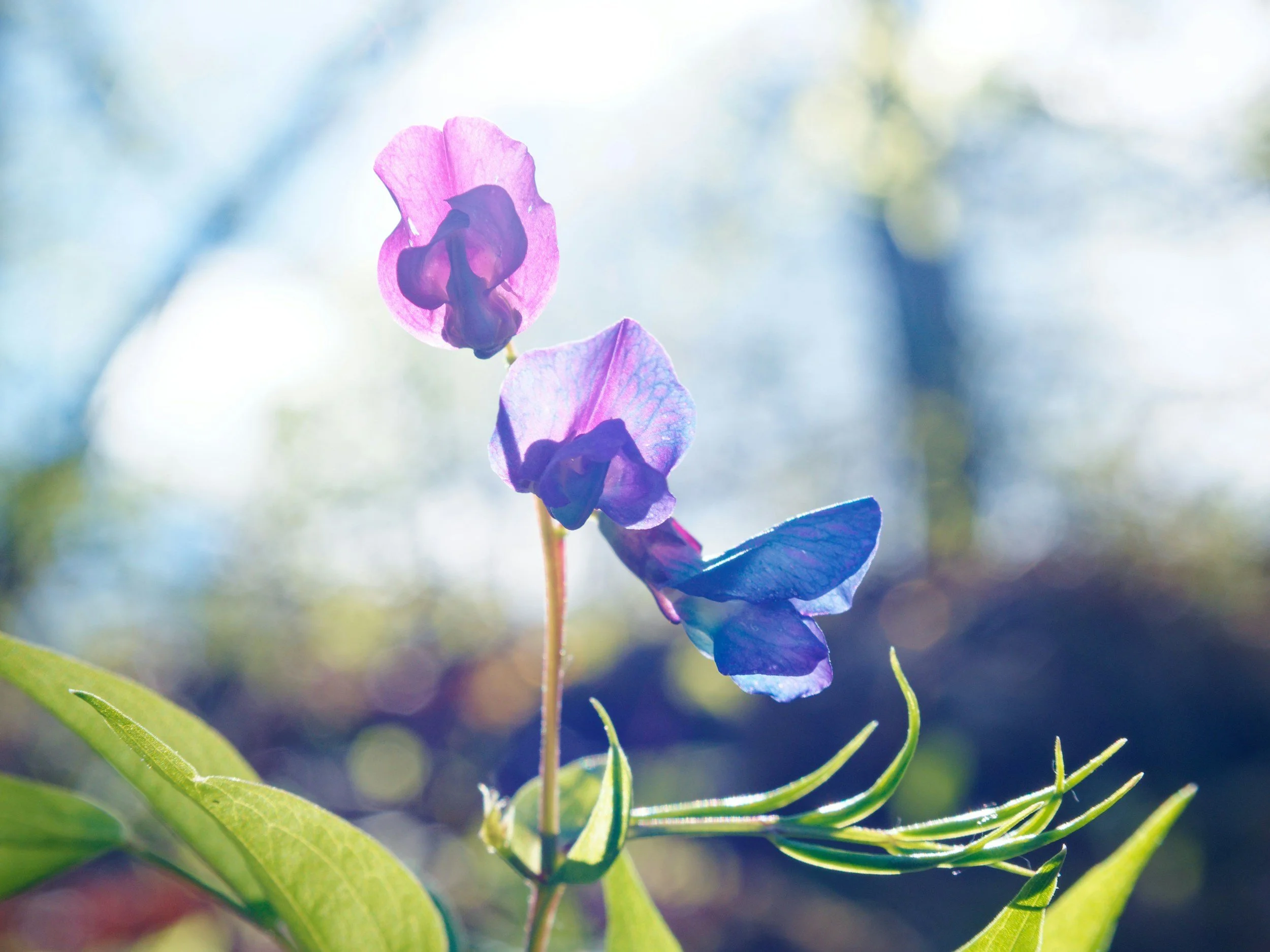
A few weeks ago, I found myself reading about a flower called Butterfly Pea.
At the time, I was interested in its traditional uses and its extraordinary blue colour. Several hours later I was reading about Renaissance herbalists, ancient medicine, Hippocrates and something called the Doctrine of Signatures.
This tends to happen when you study herbal medicine.
You start by looking up one plant and somehow end up several centuries in the past.
What fascinated me wasn't whether the theory itself was right or wrong. It was the fact that generations of people spent so much time looking at the natural world that they began seeing patterns everywhere.
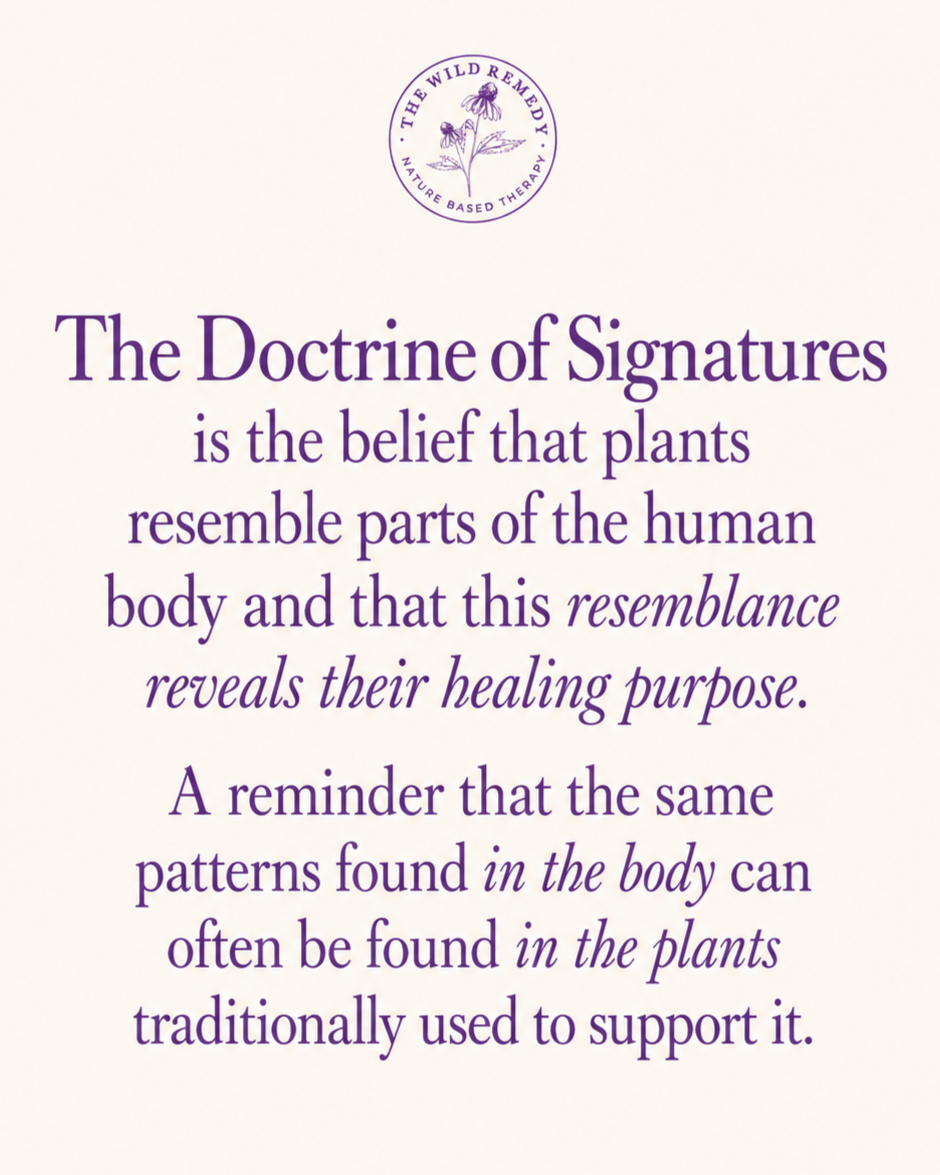
The Doctrine of Signatures is based on the idea that a plant's appearance might reveal something about its purpose. A walnut resembles a brain. Kidney beans resemble kidneys. Eyebright became associated with eye health. Lungwort, with its speckled leaves, was linked to respiratory complaints.
To a modern mind, it can sound slightly eccentric. Yet the more I read, the more I realised that the theory itself wasn't the most interesting part.
The interesting part was how people arrived there.
These were people who lived much closer to the land than most of us do today. Their understanding of plants wasn't something they consumed through articles, podcasts or social media. It came from direct experience. They knew where plants preferred to grow. They knew when they appeared, when they flowered and how they behaved through the seasons. Their knowledge developed slowly through observation and curiosity.
Whether they always reached the right conclusions is another matter entirely.
What stayed with me was the idea of looking closely enough to discover something deeper.
The Doctrine of Signatures
One of the central ideas behind the Doctrine of Signatures is that there may be more to something than its surface appearance first suggests.
As I sat with that thought, I realised how often we do the opposite with people.
We think we know somebody because we work alongside them, share a home with them or have known them for years. Yet knowing about someone is not the same as truly seeing them.
Some of the most painful experiences in life come from feeling misunderstood by people who were close enough to know better.
I suspect many of us know what that feels like.
To spend years trying to explain yourself.
To feel as though people are relating to an old version of you.
To have your intentions misunderstood.
To realise that some people have already decided who you are and have very little interest in discovering who you've become.
Reading about the Doctrine of Signatures made me wonder how different life might be if we approached people with the same curiosity that those early herbalists approached plants.
What might we discover if we looked a little more closely?
The strange thing is that whilst certain experiences left me feeling unseen, nature seemed to have the opposite effect.
The garden never asked me to justify myself.
The herbs didn't require an explanation.
The bees were entirely uninterested in my productivity levels.
There was something deeply reassuring about that.
Nature has a way of stripping away the unnecessary.
As many of you know, the last few years have been a period of rebuilding for me. There were health challenges I didn't expect, difficult experiences with people I trusted and moments where life seemed determined to head in a direction I hadn't planned.
Looking back now, I can see that many of those experiences quietly redirected me towards the path I am currently walking.
Had everything gone according to plan, I may never have started studying herbal medicine. I may never have discovered the joy of growing and working with herbs. The Wild Remedy might never have existed.
Many of the people, opportunities and experiences I value most today arrived after things I thought I wanted had fallen away.
At the time, it felt like loss.
Now it feels more like redirection.
The Blue Flower Rabbit Hole
That thought returned whilst reading about Butterfly Pea Flower.
Known botanically as Clitoria ternatea, it has been used for centuries throughout parts of Asia and within traditional Ayurvedic practices. Today, it is often celebrated for its vivid blue colour, but its story runs much deeper than aesthetics.
Traditionally it has been used as a cognitive tonic, supporting memory, concentration and mental clarity. It has also been associated with relaxation, emotional wellbeing and female health.
Modern research continues to explore its antioxidant properties, particularly the anthocyanins responsible for its remarkable blue colour. These compounds are one of the reasons Butterfly Pea Flower has become increasingly popular in natural beauty and skincare formulations, with growing interest in its potential role in supporting healthy skin and hair.
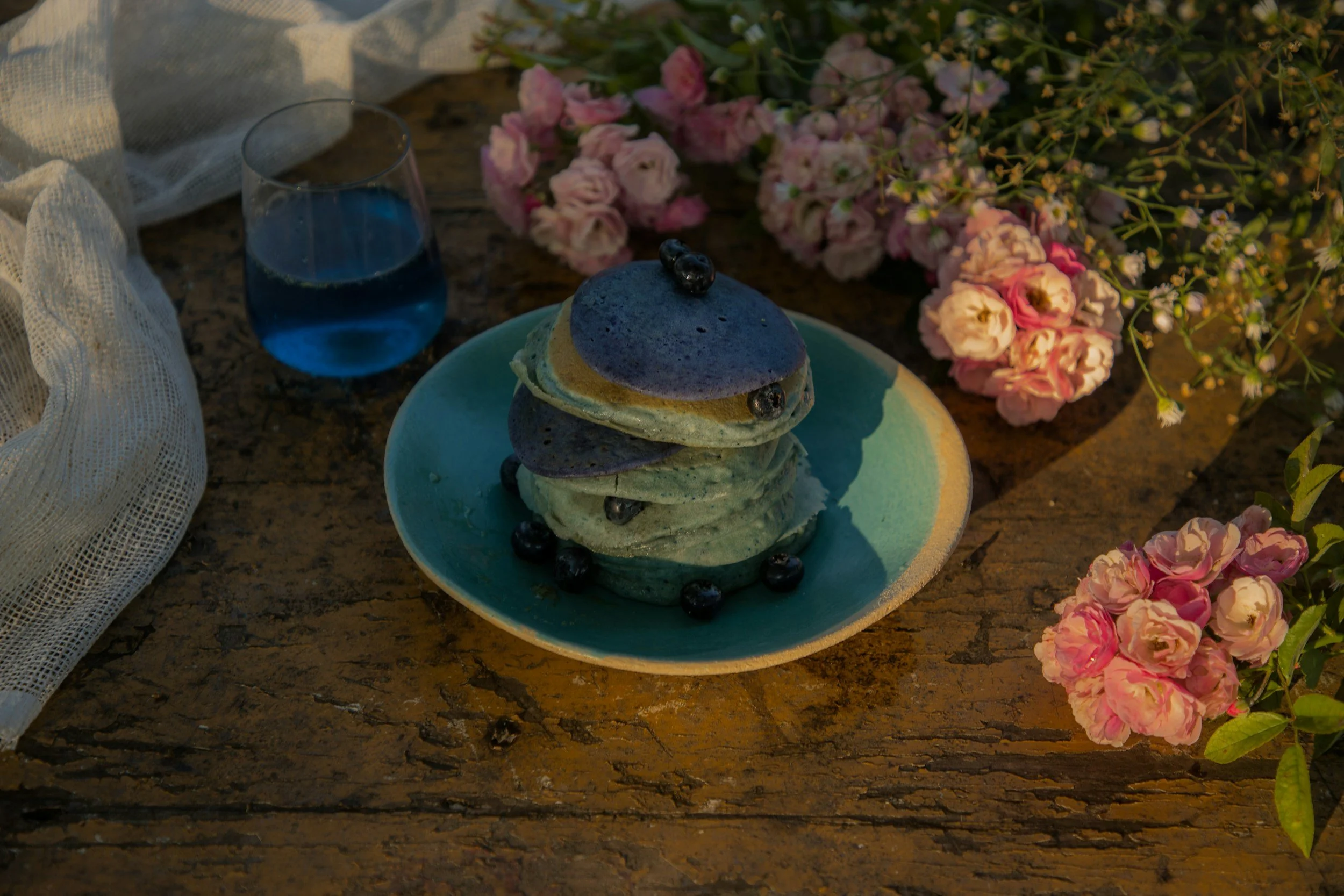
It is also becoming increasingly popular in natural baking, lattes and botanical drinks, where its vibrant blue colour creates something that feels both playful and a little bit magical.
Here at The Wild Remedy, we've been quietly experimenting with Butterfly Pea Flower too and are already creating something rather lovely inspired by this remarkable plant.
Members of The Wild Circle will be the first to hear about it, experience it and have the opportunity to try it.
Yet what fascinated me most wasn't any of that.
It was the conversations surrounding the flower.
Conversations, Curiosity & The Wild Circle
Recently, whilst out on a run with a group of women, I found myself talking about Butterfly Pea Flower.
I'd been experimenting with it myself and had become fascinated by its history, traditional uses and, of course, its extraordinary blue colour. What began as a casual conversation about herbs and wellbeing soon took on a life of its own.
The conversation wandered through sleep, hormones, stress, ageing, herbal remedies, gardens and the strange things we discover when we begin paying closer attention to our bodies.
At some point I mentioned Butterfly Pea Flower's traditional reputation as an aphrodisiac.
That certainly got everyone's attention.
There was a mixture of surprise, curiosity, laughter and more than a few raised eyebrows.
Across various traditional practices, Butterfly Pea Flower has been associated with vitality, sensuality and female wellbeing. Its shape, botanical name and long history within women's health traditions have all contributed to its folklore and reputation.
Whether these traditions hold folklore, observation or something in between is part of what makes herbal medicine so fascinating.
By the end of the conversation, we had spent very little time talking about the flower itself.
In many ways, the flower had simply become the starting point.
What stayed with me afterwards wasn't the information. It was the feeling of the conversation itself.
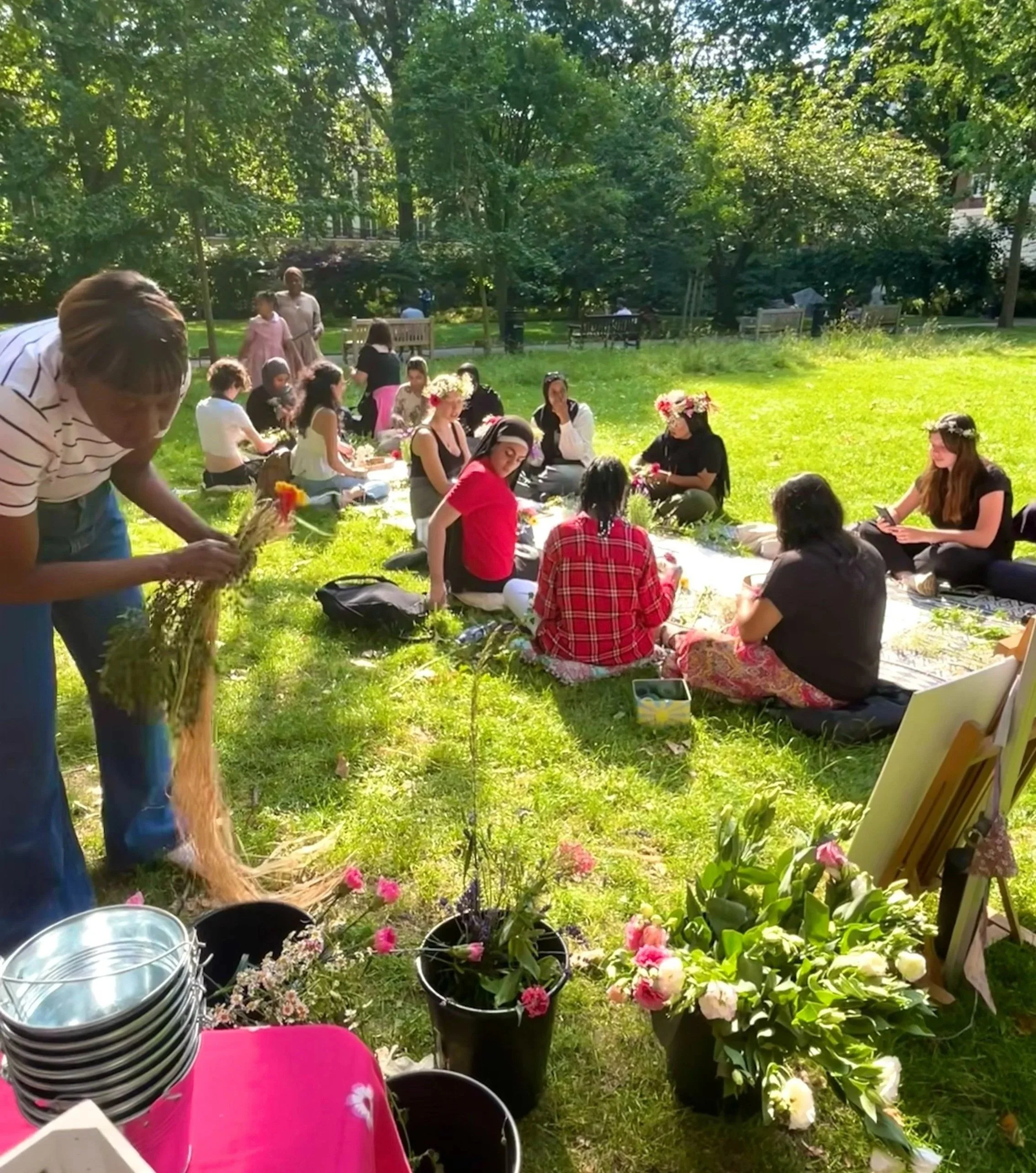
There is something rather special that happens when women gather and begin sharing stories. One person recalls a remedy passed down through their family, another shares something they have recently discovered, somebody else remembers an experience they had forgotten about and before long the conversation has travelled somewhere none of you expected.
The best conversations are rarely planned. They unfold naturally.
A simple observation sparks a question. One story prompts another. Curiosity becomes contagious.
Everyone leaves having learnt something, not only about the plant but about one another.
In a world that often feels rushed and transactional, those moments feel increasingly precious.
Perhaps that is one of the reasons I have grown to love herbal medicine so much.
The plants themselves are fascinating, of course, but they also seem to create opportunities for connection.
Looking back, I realise that some of the most meaningful things I've learnt over the last few years haven't come from formal education alone. They've come from conversations. From gardens. From cups of tea. From people willing to share their experiences honestly.
The plants simply gave us a place to begin.
In many ways, that spirit has quietly become the heart of The Wild Circle.
Not a place where anyone claims to have all the answers, but a space where questions are welcomed, stories are valued and curiosity is encouraged.
Long before social media, people gathered around herbs, flowers, food and gardens to exchange knowledge, experiences and stories.
Perhaps we're simply continuing that tradition in our own way.
The Middle Chapters
As we move through June, I find myself reflecting on something I wrote about back in January.
Nature keeps a different calendar.
If we look at the rhythms of the natural world, spring feels far more like a beginning than the depths of winter. Buds swell, seeds germinate and life returns.
By that measure, June doesn't feel like the halfway point of the year at all.
It feels more like the middle chapters.
There is still plenty of growing left to do.
That thought feels reassuring.
Some things reveal themselves quickly. Others take time.
The garden reminds me of this every year.
Some seeds appear within days. Others seem to vanish completely before quietly emerging weeks later.
People are not so different.
Looking back, some of the things I once viewed as endings were actually beginnings in disguise.
Certain opportunities disappeared.
Some relationships ran their course.
There were periods where I felt misunderstood by people who I assumed knew me well.
With hindsight, those experiences created space for something more aligned.
Perhaps being truly seen has less to do with validation and more to do with belonging.
Finding the places, people and work that allow you to be fully yourself and seen without constantly explaining who you are.
The older I get, the more valuable that feels.

A Few Final Thoughts
The Doctrine of Signatures may never sit comfortably within modern scientific thinking, and that is perfectly understandable.
Yet I suspect the reason it has survived for so long has less to do with proving anything and more to do with the questions it invites us to ask.
Whether one sees it as coincidence or design, there is something remarkable about the repeating patterns found throughout nature. In previous journals we've explored the spirals, helixes and spherical forms woven through creation — patterns found everywhere from flowers and seeds to the human body itself. The Doctrine of Signatures sits within that same sense of wonder, inviting us to look more closely at the natural world and consider whether some plants bear visual clues that point us towards their traditional uses. For many, these patterns reflect not randomness, but the creativity, order and wisdom of a Creator revealed through nature itself.
This month those questions arrived disguised as a blue flower.
A flower with a long history, a rather intriguing botanical name, a reputation for supporting memory, beauty, female wellbeing and, if traditional herbal folklore is to be believed, a few other interesting qualities too. 😉
Not bad for something I originally looked up because I liked the colour.
Where this particular rabbit hole leads next remains to be seen.
Perhaps the greatest gift of the Doctrine of Signatures is not that it provides all the answers, but that it teaches us to observe more carefully. In a world that often rushes past the details, it encourages us to slow down, pay attention and rediscover the wonder woven throughout the natural world.
June Garden Notes
In the Garden This Month
June is one of the most generous months in the garden.
Whether you're tending an allotment, a balcony, a cottage garden or a few pots on a windowsill, there is a sense that everything is finally finding its stride.
This is a wonderful month to stop rushing and start observing.
Notice which plants are thriving.
Notice where pollinators gather.
Notice what repeatedly does well in your space.
Nature is constantly offering feedback.
Continue sowing salads, beetroot and herbs for succession harvests.
Support taller plants before summer storms arrive.
Harvest herbs regularly to encourage fresh growth.
Leave some flowers for pollinators and seed heads for wildlife.
Water deeply rather than little and often.
Deadhead where appropriate but don't become obsessed with tidiness.
A slightly wild garden is often a healthier one.
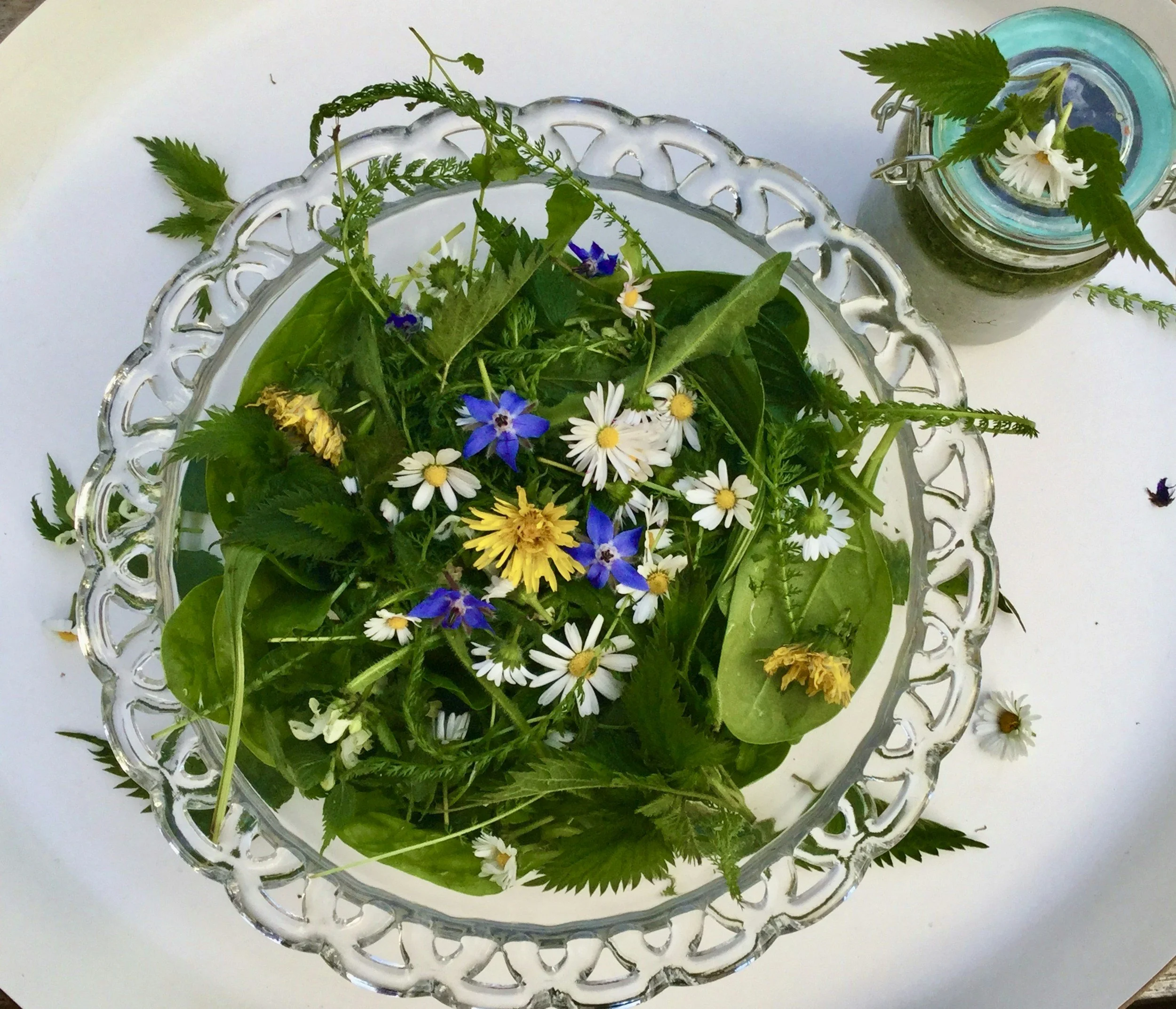
What I'm Harvesting This Month
🌿 Lemon Balm
🌿 Mint
🌿 Chamomile
🌿 Calendula
🌿 Rose Petals
🌿 Rosemary
🌿 Sage
🌿 Thyme
🌿 Nasturtiums, Dandelions
🌿 Lavender stems as they begin preparing for their summer display
The drying racks will soon be filling up and preparations for autumn and winter begin long before they arrive.
Butterfly Pea Evening Ritual
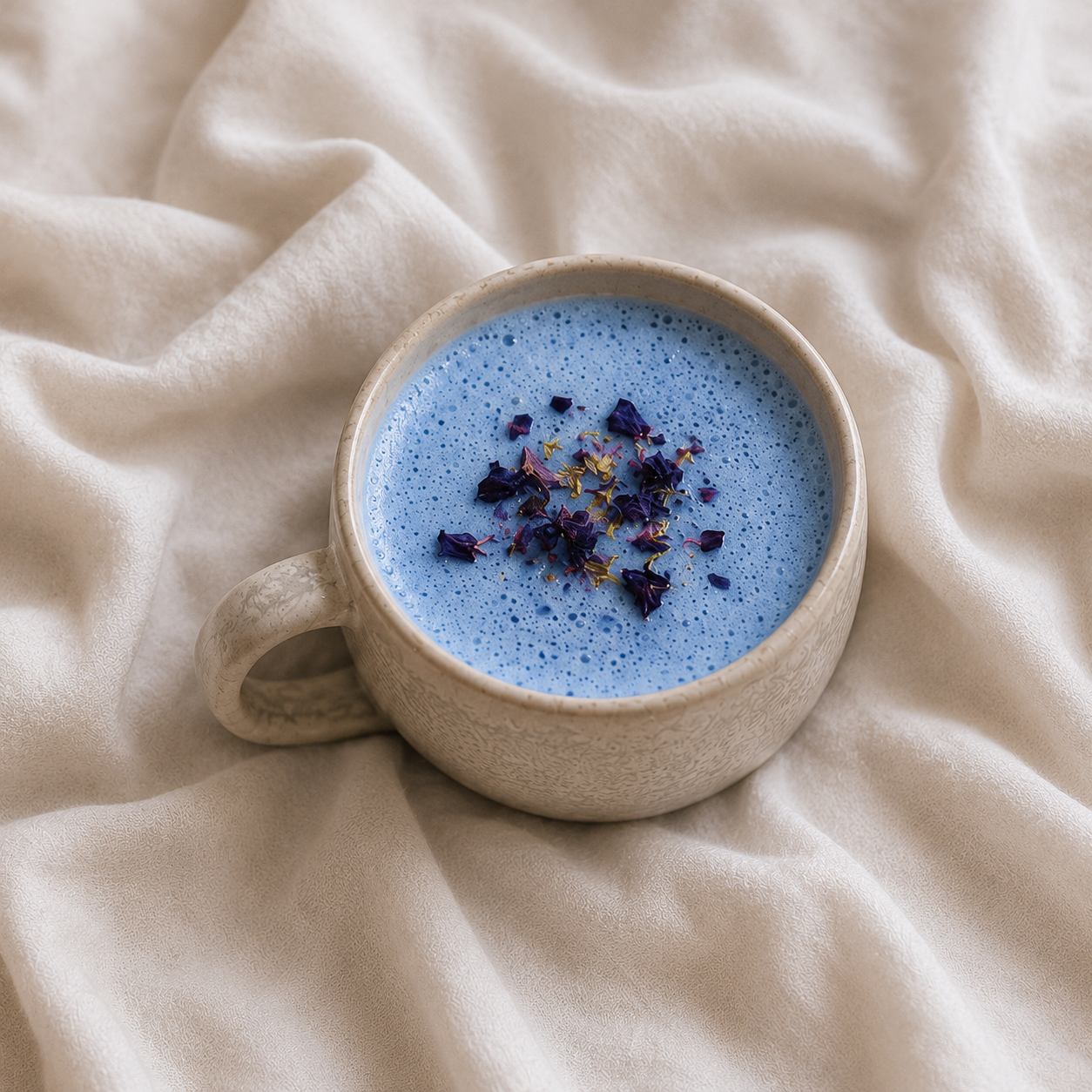

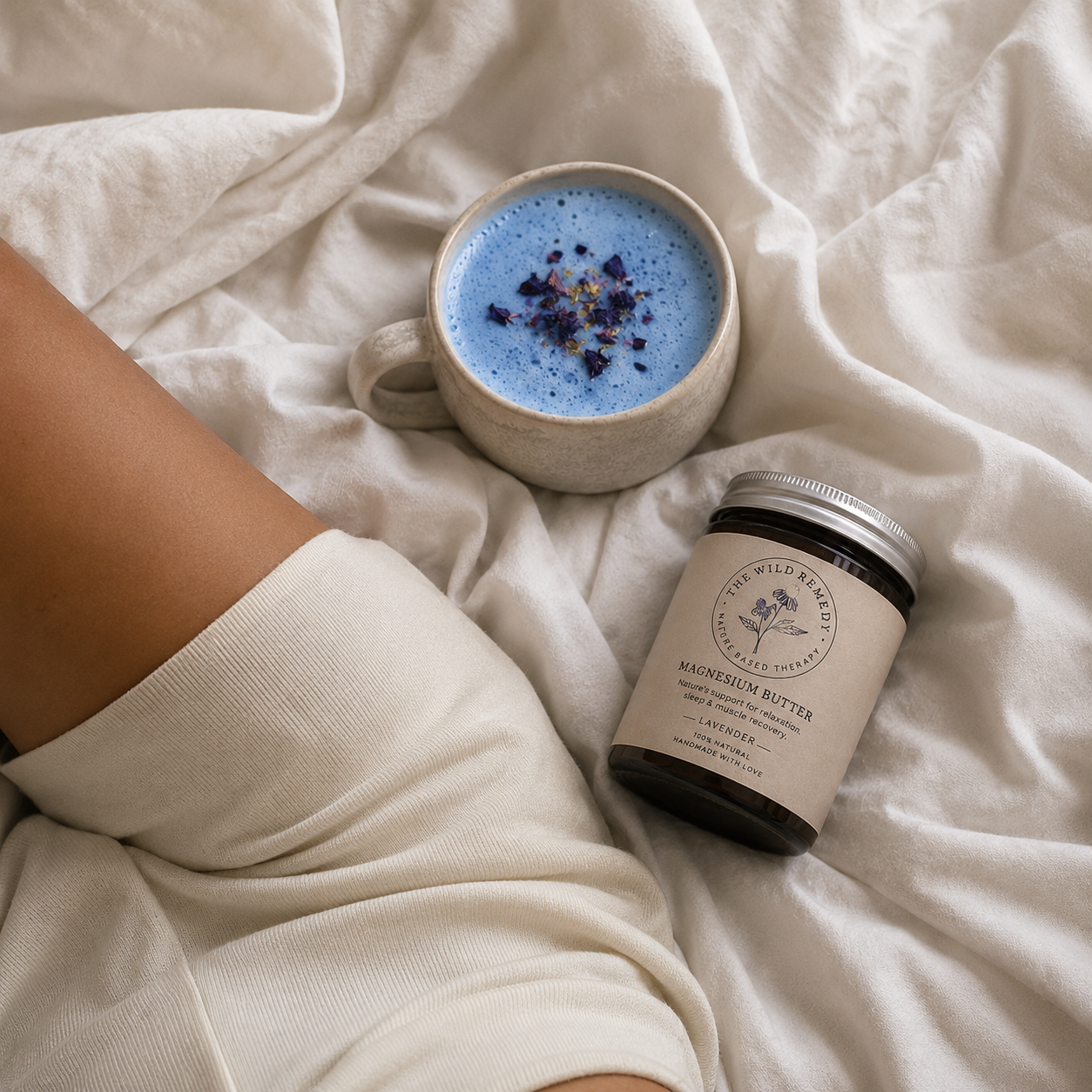
My favourite way to enjoy Butterfly Pea Flower has become part of my evening wind-down routine.
Ingredients
200ml warm coconut milk
1 teaspoon Butterfly Pea Flower powder
½ teaspoon local honey or maple syrup
Pinch of cinnamon
Optional splash of vanilla extract
Method
Whisk the Butterfly Pea Flower powder into a small amount of warm coconut milk first to create a smooth paste.
Add the remaining milk and whisk until frothy.
Sweeten to taste and pour into your favourite mug.
Why I Enjoy It
Traditionally Butterfly Pea Flower has been used to support memory, relaxation, emotional wellbeing, anxiety and female health. Many people also enjoy it for its vibrant colour, antioxidant content and potential support for healthy skin and hair.
Look for organic, pure Butterfly Pea Flower powder with no fillers or additives. The powder I've recently been experimenting with comes from Ancient Extracts because of its purity, vibrant colour and commitment to quality sourcing.
For me, the ritual is just as important as the ingredients.
On many evenings it now sits alongside another favourite ritual — applying our handcrafted Magnesium Butter before bed, creating a simple moment to slow down, switch off and prepare for rest.
A Simpler Summer Version
During warmer weather, I often enjoy Butterfly Pea Flower as a refreshing botanical drink.
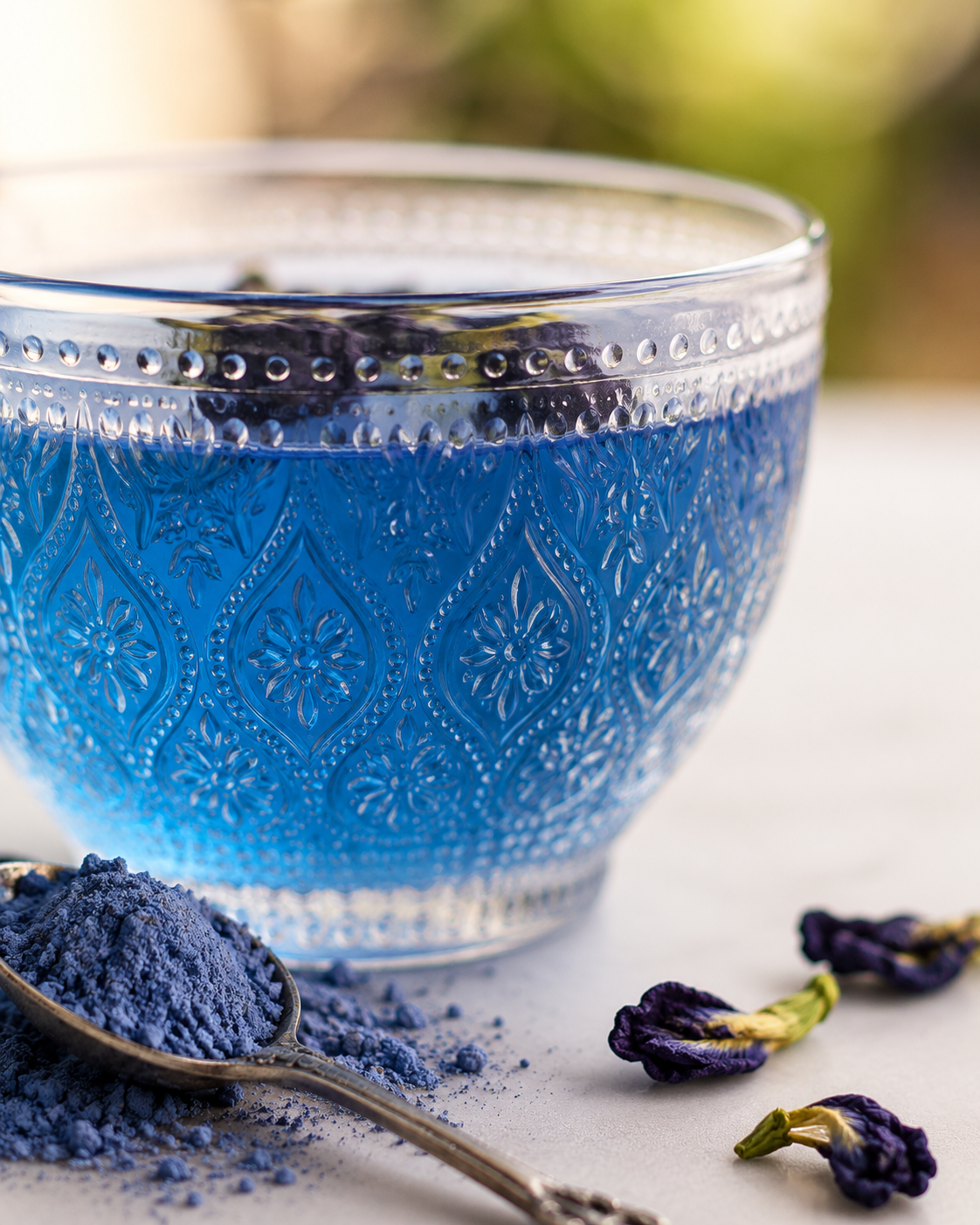
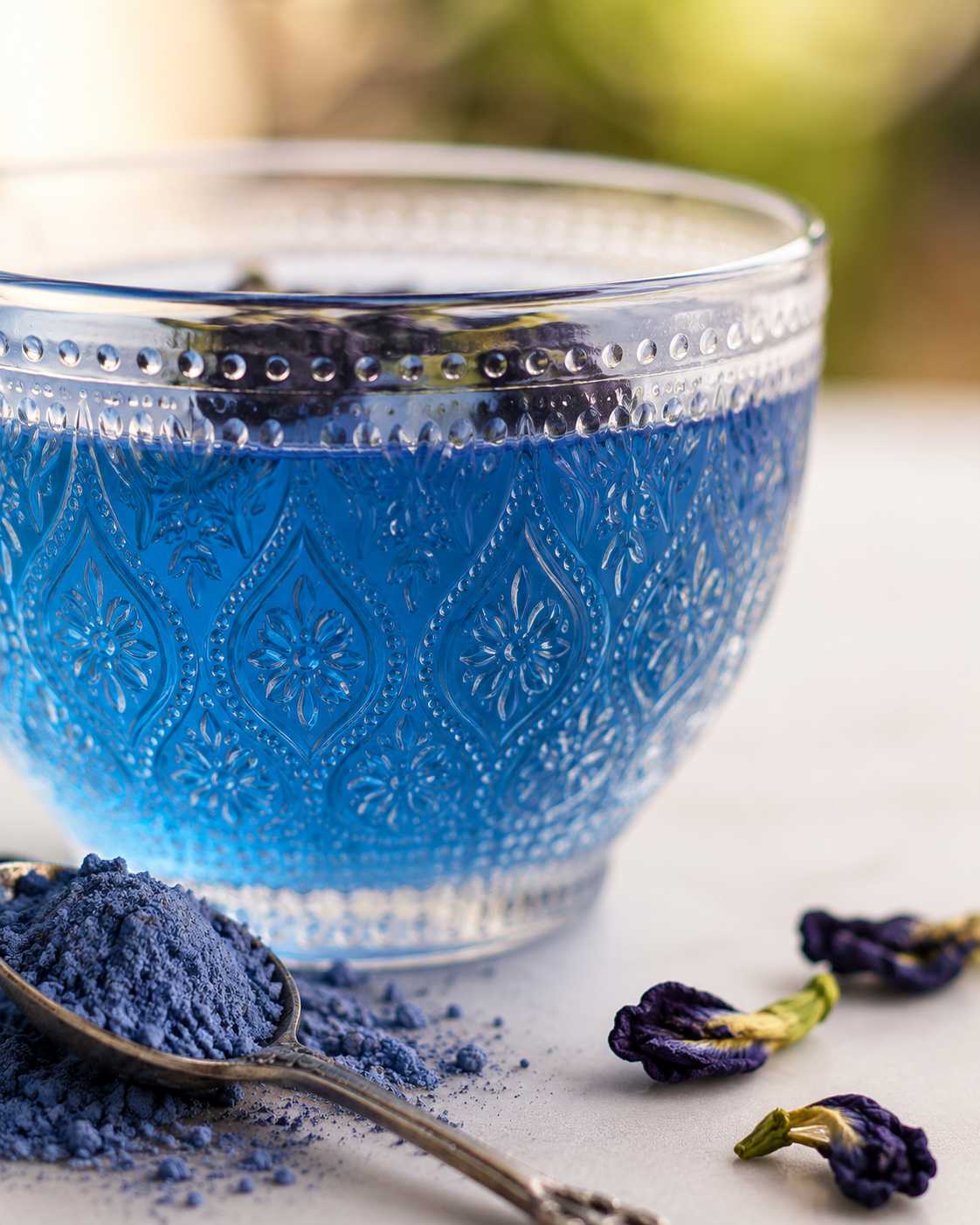
Simply whisk 1 teaspoon of Butterfly Pea Flower powder into cold water, add the juice of half a lemon and a few ice cubes.
The lemon transforms the drink from deep blue to a beautiful violet-purple colour, making it feel a little like a science experiment and a herbal remedy rolled into one.
For a touch of sweetness, add a small amount of honey or a few fresh mint leaves from the garden.
It's refreshing, caffeine-free and a lovely way to enjoy the plant during the warmer months.
Another Simple Favourite
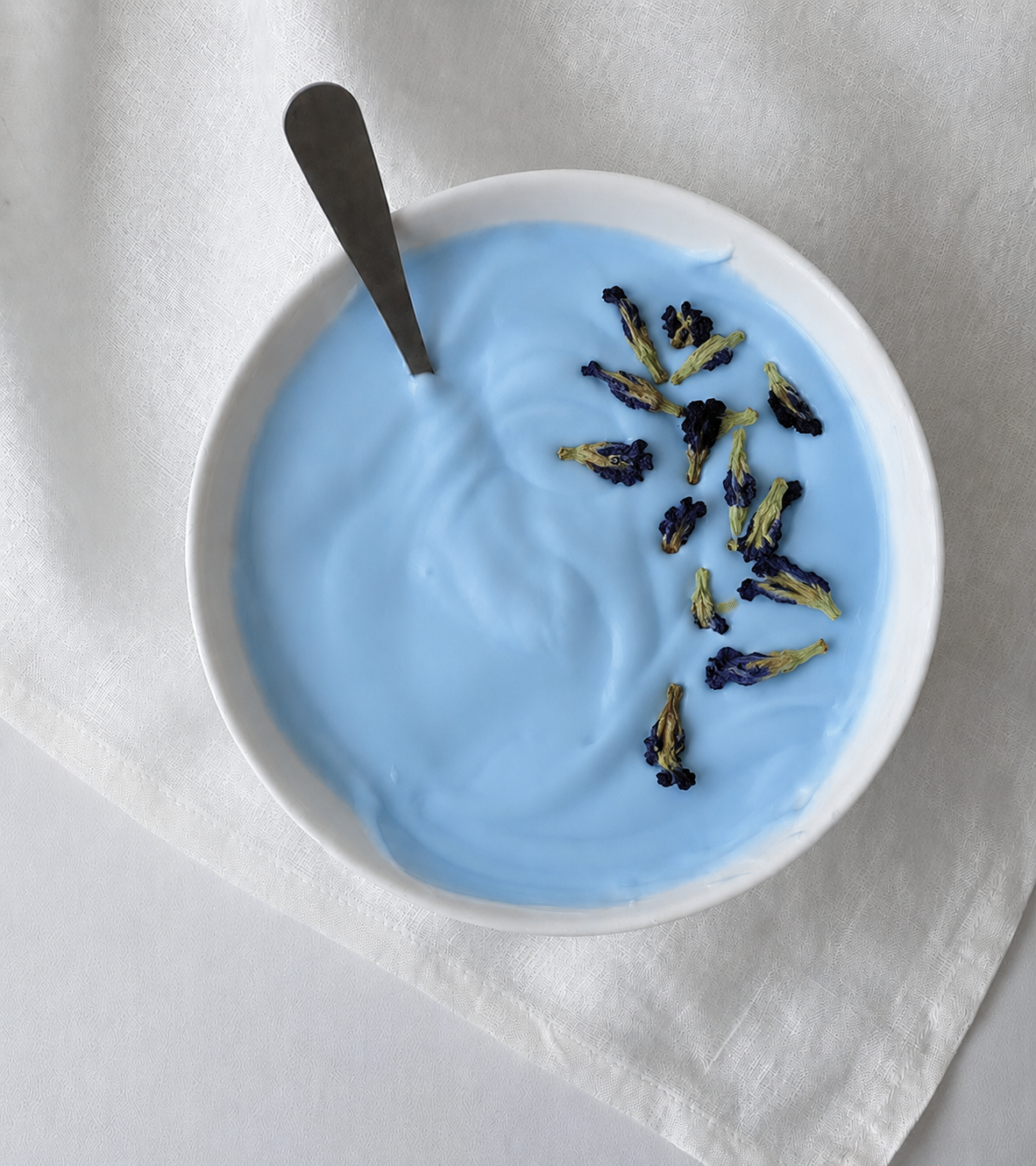
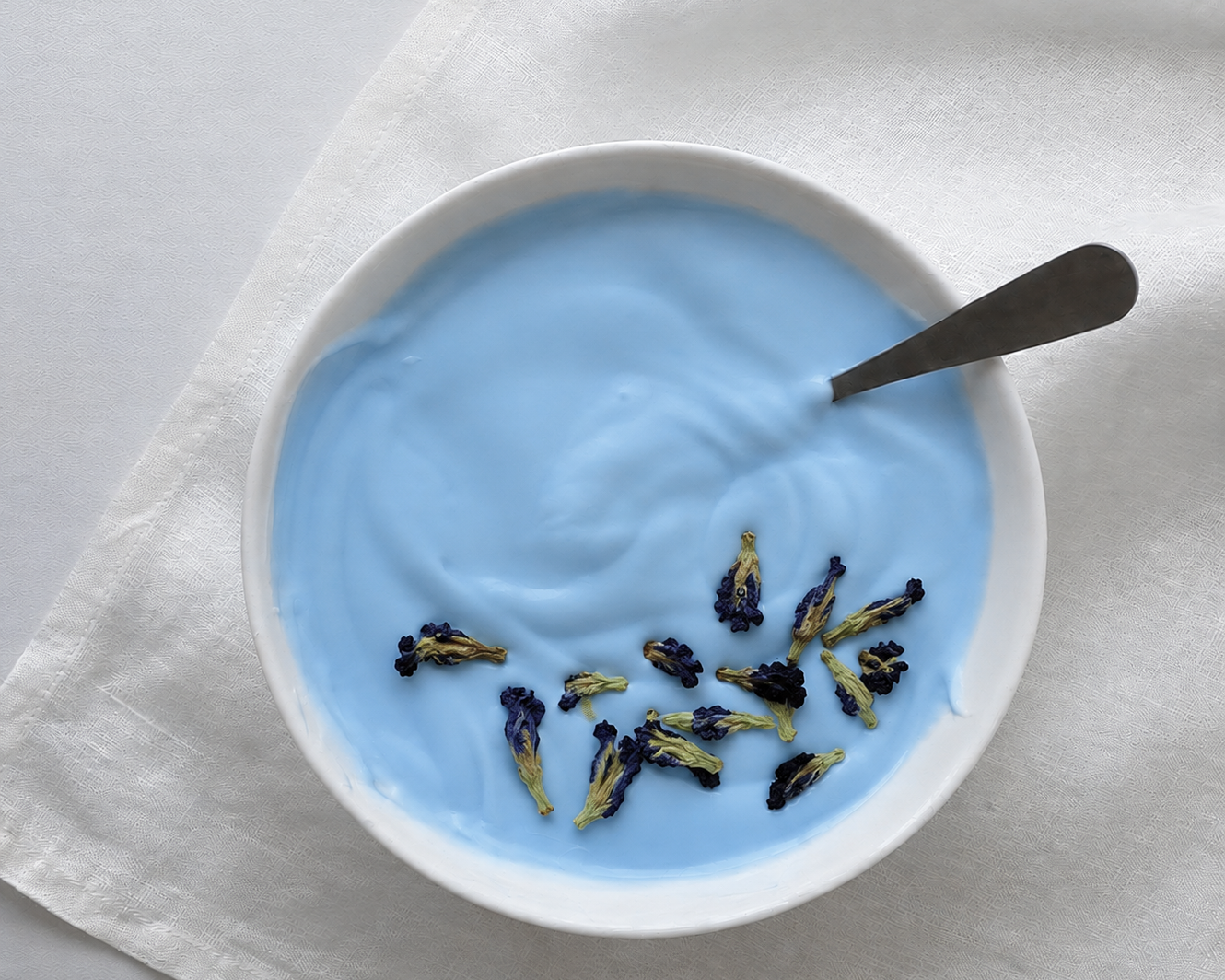
A teaspoon of Butterfly Pea Flower powder stirred into Greek yoghurt creates a beautiful sky-blue bowl that's rich in protein and incredibly simple to prepare.
I often enjoy it with frozen blueberries, a drizzle of honey, dried Butterfly Pea Flowers or a handful of seeds.
A gentle reminder: Nature is wonderfully diverse, and so are we. While Butterfly Pea Flower is widely enjoyed as a food and drink, always listen to your body and seek professional advice if you are pregnant, breastfeeding, taking medication, or managing a health condition.
From The Wild Remedy
Handcrafted Magnesium Butter
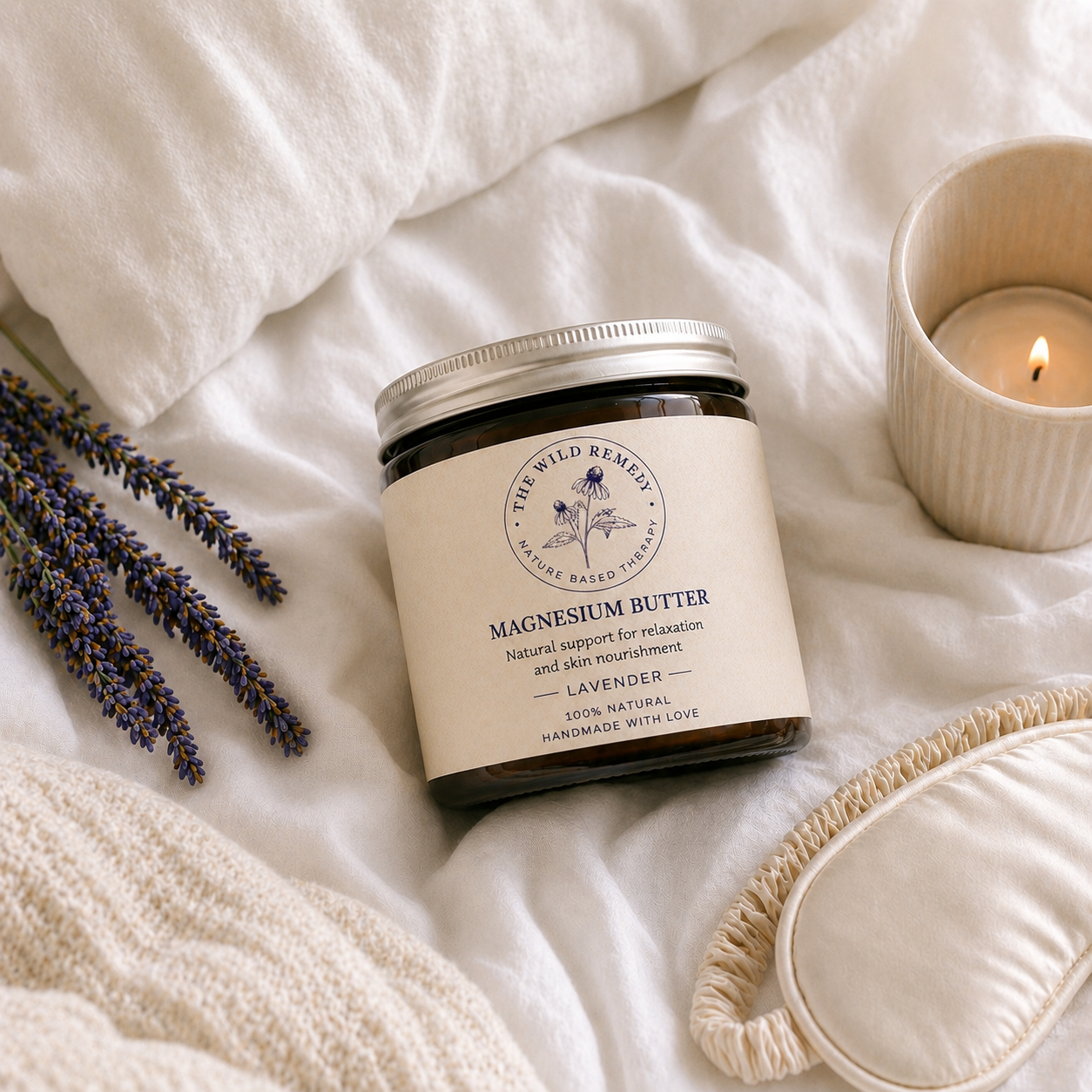
One of our most loved products continues to be our handcrafted Magnesium Butter.
Created using carefully selected natural ingredients and available in Lavender and Unscented varieties, it has become part of many customers' evening routines and self-care rituals. Whether its for post workout muscle recovery, part of your sleep routine or simply to feel calmer this creation is still proving to be a favourite.
Workshops, Collaborations & Bespoke Experiences
Some of the most rewarding things we create begin with a conversation.
Alongside our nature-based workshops, we work with retreat hosts, wellbeing practitioners, schools, community organisations, brands and creators to design meaningful experiences rooted in nature, creativity and connection.
From flower pressing and botanical crafts to herbal self-care workshops and wellbeing experiences, every project is shaped around the people it is created for.
We also create bespoke gift boxes, welcome gifts, event favours and curated hampers featuring our handcrafted natural products for retreats, wellbeing events and special occasions.
No two collaborations are ever quite the same, and that's exactly how we like it.
Many of the projects we are most proud of started with a simple conversation and an idea that grew from there.
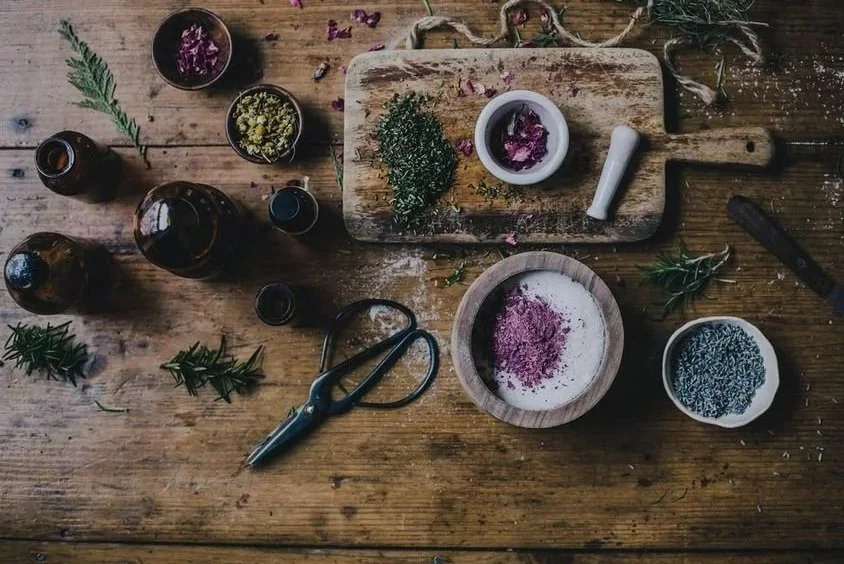
The Wild Circle
In many ways, the spirit behind these conversations has quietly become the heart of The Wild Circle.
A growing community of people connected by a love of nature, creativity, seasonal living, wellbeing and lifelong curiosity.
If this journal resonates with you, you'll feel right at home.
Until Next Month
May your herbs thrive, your tea be warm, your conversations meaningful and your curiosity remain intact.
Bee
Founder, The Wild Remedy
Further Reading
Hippocrates and the foundations of natural medicine
Paracelsus and the history of the Doctrine of Signatures
The Book of Herbal Wisdom — Matthew Wood
Alchemy of Herbs — Rosalee de la Forêt
Medical Herbalism — David Hoffmann
Research into Clitoria ternatea (Butterfly Pea Flower), anthocyanins and traditional Ayurvedic uses