

Before We Even Knew the Language of Light
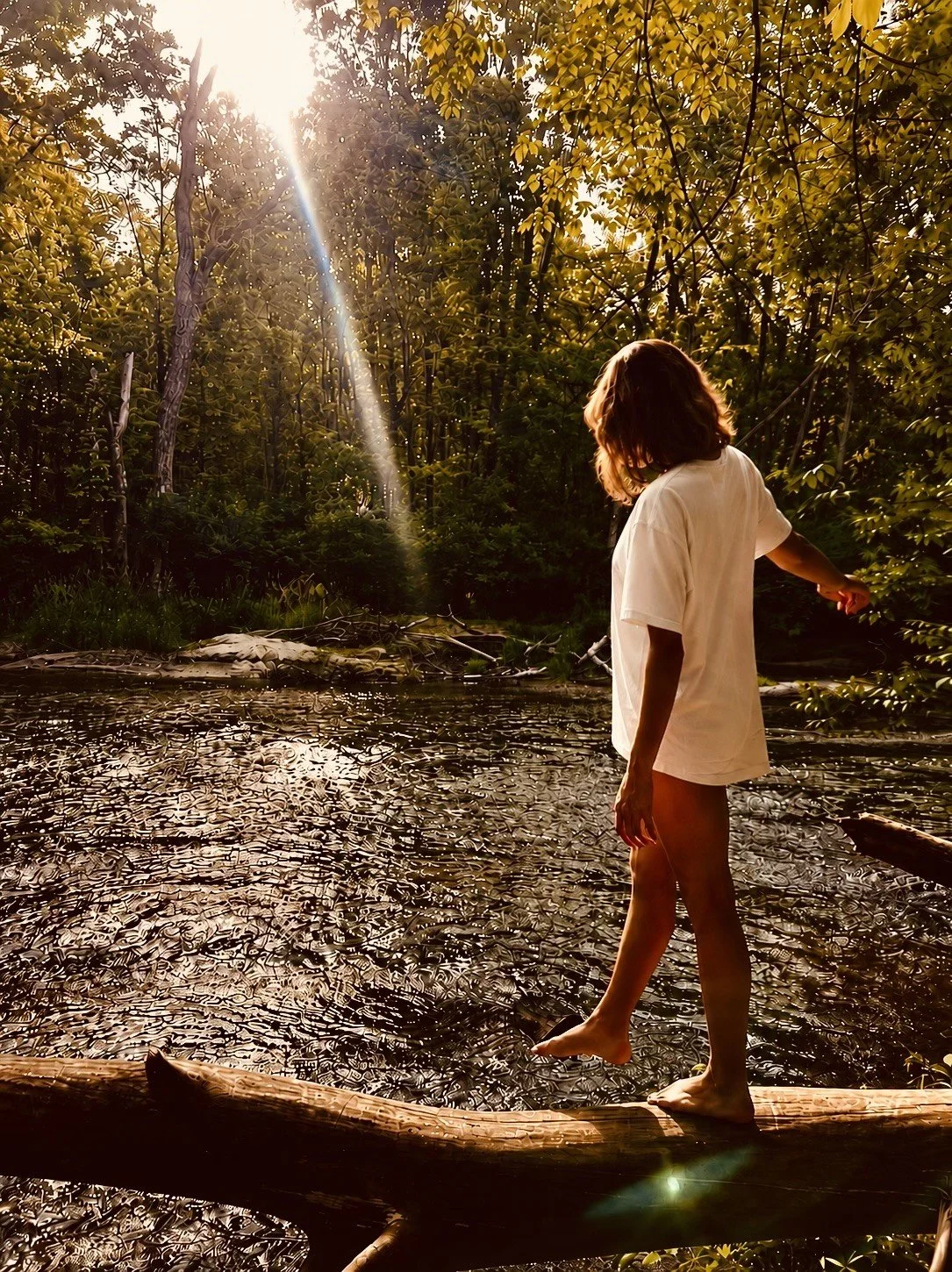
August Journal | The Wild Remedy
August always feels different.
This year, I feel that change more deeply.
There are certain summers that quietly become part of our collective memory, and this already feels like one of them. Weeks of exceptional heat have changed the landscape before our eyes. Lawns that would normally be green have faded to gold, gardens are showing the strain of prolonged dry weather and conversations that once began with "How are you?" now often begin with "Have you had any rain?" Across the world, headlines have been filled with heatwaves, wildfires and record temperatures, reminding us that the relationship between people and the natural world has perhaps never felt more immediate.
Yet, even within all of this, nature continues to do what it has always done. Bees still move with quiet purpose among the lavender, seeds begin to form where flowers once bloomed and, almost unnoticed, the quality of the light will soon start its slow transition towards another season. There is something deeply reassuring about that. Life continues, adapting where it can, reminding us that even in extraordinary seasons there is still wisdom to be found by paying attention.
Living through a summer like this inevitably changes the way we look at the natural world. It draws our attention to things we might once have overlooked and reminds us that our relationship with creation is far closer than we often realise.
Nature has always responded to changing seasons, but we are becoming increasingly aware of the responsibility we carry in how we care for the world entrusted to us.
Stewardship is no longer an abstract idea. We witness it in our gardens, parks, allotments, school grounds and communities. We see it in the soil that can no longer hold water, in plants placed where the heat has become too intense and in the insects searching for food among increasingly fragmented habitats.
Long before science gave us language for ecosystems, biodiversity and climate, there was already the simple invitation to tend and keep the earth well. I have always found something grounding in that. Caring for creation has never been separate from caring for ourselves because, in so many ways, the two have always belonged together.
A Year of Repositioning
I had intended to write this journal in July.
Instead, I stepped away, not because I had nothing to say, but because I had reached a place where saying less felt more important than producing something for the sake of being visible.
July quietly marked a year since a chapter of my life changed me in ways I could never have anticipated. It was one of those moments when life suddenly asks questions you never expected to answer. There was uncertainty, there were days that carried more fear than I admitted aloud and there was an overwhelming awareness of how quickly the ground beneath us can shift.
Looking back now, I do not think it was simply my body asking to be heard. Every part of me had been carrying more than it was ever designed to hold.
Sometimes our lives continue moving long after our hearts have become exhausted. We become so accustomed to coping that we no longer recognise how much energy it takes to keep going. Eventually, something interrupts the rhythm we have been forcing ourselves to maintain.
That season became an invitation to rebuild far more than my health.
Over the past year, I have gradually repositioned almost everything: my thoughts, priorities, surroundings, relationships, work, expectations and even the way I measured success. What once felt like losing myself now looks more like creating the conditions in which I could find myself again.
There are people who quietly held me together during that season without ever asking for recognition. Family, friends and those who simply arrived with kindness when they probably had no idea how much it mattered. Reaching this milestone has filled me with a gratitude that is difficult to put into words because healing is rarely something we accomplish entirely on our own. It often reaches us through the people willing to walk beside us.
The more I have reflected on light this year, the more I have realised that it is not only something we observe in creation. We can become it for one another too. Often not through grand gestures or remarkable words, but through simple acts of presence, encouragement and kindness that illuminate a path someone else may be struggling to see.
Stepping away from writing in July became part of that journey.
I needed time to reconnect with home and a garden. I needed distance from the expectation to keep producing, posting, explaining and planning. I needed space to think about where The Wild Remedy is heading, but also where I am heading.
Slowing down creates room for things we have been too busy to notice, and one subject kept returning to me.
Following the Light
It began, as these things often do, in the garden.
Some plants appeared completely at ease beneath the relentless summer sunshine, while others were already asking for shade by midday. One corner flourished in full sun and another remained cool and protected beneath the trees. The same day, the same garden and the same weather, yet every plant responded differently according to where the light reached it.
It made me wonder how often the same is true for us.
That simple observation led me down one of those wonderfully meandering paths that began with herbal medicine notes and ended somewhere between plant physiology, neuroscience, chronobiology and animal behaviour. Before long, I was reading about photosynthesis, circadian rhythms, specialised light receptors within the eye and the extraordinary ways living organisms respond to light every moment of every day.
The more I learned, the more I returned to wonder.
Plants possess specialised photoreceptors capable of detecting different wavelengths, enabling them to respond to changing daylight with remarkable precision. Light influences germination in certain species, directs growth, regulates flowering and powers photosynthesis, the process through which sunlight is transformed into chemical energy.
Every green leaf quietly captures light, produces sugars to sustain the plant and contributes oxygen to the atmosphere through a process upon which almost every living thing depends. The more I have learned about photosynthesis, the more impossible it has become to walk past a leaf without seeing it differently. What appears to be an ordinary green surface is, in reality, an extraordinary living factory. Millions of microscopic chloroplasts inside every leaf are quietly capturing sunlight, using that energy to transform water and carbon dioxide into the sugars that sustain the plant, while releasing the oxygen that you and I will breathe with our very next breath.
It is happening all around us, every second of every day, silently and without applause. We call it photosynthesis because science has given it a name, but naming something has never made it any less miraculous.
The more closely I study plants, the more extraordinary they become.
What Light Is Really Doing
Our bodies tell a remarkably similar story.
Long before we consciously register the morning, specialised cells within the retina are already responding to daylight. Those signals travel to the brain and help regulate our circadian rhythm, the intricate biological clock influencing sleep, hormone production, digestion, metabolism, body temperature and countless physiological processes taking place throughout the day.
Morning light helps establish that rhythm, while darkness allows melatonin to rise. Our bodies are constantly interpreting information carried by light.
One of the things that fascinated me most was discovering that my eyes are doing far more than helping me see. Hidden within the retina are specialised cells that are not primarily involved in vision at all. Instead, they measure light itself, sending signals directly to the brain that help set the body's internal clock. Before we have consciously opened our eyes to greet the morning, our biology has already begun responding to the day. Every sunrise is quietly providing information that influences hormones, alertness, metabolism, body temperature, digestion and the timing of countless processes we rarely stop to consider. It made me realise that daylight is not simply something we look at. It is something our bodies are constantly listening to.
Research into mental wellbeing continues to deepen our understanding of this relationship. Exposure to natural daylight has been associated with healthier sleep patterns, improved mood and support for those affected by seasonal depression. Scientists continue exploring serotonin, circadian biology and the importance of spending time outdoors because human biology responds to changing patterns of natural light rather than the artificial schedules modern life often imposes upon us.
It brought me back to something I explored in my January journal.
The calendars and clocks we organise our lives around are remarkable human achievements, refined over centuries to bring structure to society, but they remain human constructs. Our bodies continue to respond to sunrise and sunset rather than numbers on a watch.
In my own view, and in the view of many people working within circadian health, changing the clocks during the darker months can move us even further from the natural light signals our brains are trying to follow at precisely the time of year when daylight is already scarce. I cannot help wondering whether our physical and mental wellbeing would be better served by living more closely in step with the rhythm nature has always provided.
Reading these studies often leaves me with the same thought.
Nature was never waiting for us to discover any of this. Research is helping us understand mechanisms that have have existed since the beginning.
There can be an assumption that science removes mystery, yet I have found the opposite to be true. Each discovery reveals another layer of astonishing complexity. Advances in technology allow us to observe processes previous generations could never have imagined, giving language to phenomena that have always been unfolding around us.
Nature was here first, and science has been catching up ever since.
That is not a criticism of science. It is a celebration of human curiosity and our desire to ask questions, test ideas and understand the world around us. Knowing how something works does not diminish its beauty. It often elevates it, drawing our attention to the precision, elegance and interconnectedness woven throughout the natural world.
With every discovery, my own faith became stronger.
Every answer seems to uncover another question, and the opening pages of Scripture begin with light before almost anything else.
Long before humanity understood wavelengths, photons or circadian biology, light was already presented as something that brings order from chaos, reveals what could not previously be seen and makes life possible.
Understanding the mechanism has never explained away the miracle. It has made me marvel even more.
That relationship with light extends far beyond plants and people.
Many animals instinctively seek sunlight to regulate their body temperature before moving into shade once enough warmth has been gathered. Birds adjust breeding, migration and feeding behaviours according to changing daylight. Pollinating insects navigate using patterns of sunlight invisible to the human eye. Woodland mammals emerge at remarkably precise times, guided by rhythms established long before clocks existed.
Everywhere we look, life is responding to light.
I wonder whether that is one reason so many of us feel different after spending time outdoors. Nature is not performing magic; we are biological beings living within biological rhythms that modern life repeatedly encourages us to ignore.
Artificial lighting extends our evenings. Screens accompany us from morning until night. We travel between buildings, cars, offices and shops while spending surprisingly little time beneath the sky our bodies were designed to experience.
Then we wonder why we feel disconnected.
Returning to What Has Always Been
Some of the most meaningful conversations I have had over the past year have taken place outside.
During workshops, gardening sessions and quiet walks beneath trees, something changes when people find themselves surrounded by the natural world. Children begin asking questions no classroom could have predicted. Adults notice birdsong they had stopped hearing years ago. Someone pauses to watch a bee disappear into lavender and the conversation unexpectedly moves from flowers to anxiety, purpose, healing or hope.
It has also made me wonder whether we are not only shaped by the places we find ourselves, but occasionally entrusted with them. A workplace, a friendship, a neighbourhood, a waiting room, a difficult season or even a chance encounter may become an opportunity to bring hope, steadiness and quiet encouragement to someone else's story. We seldom realise how much light a single life can carry until we have needed it ourselves.
Nature has a remarkable way of slowing us down without demanding that it does.
That has become an even deeper part of what I hope The Wild Remedy continues to offer.
Whether someone discovers us through one of our handcrafted botanical products, joins a workshop, asks for help with a garden or spends an afternoon creating with plants, I hope the experience offers more than the activity itself. I hope it creates an opportunity to reconnect with creation in a way that also gently reconnects us with ourselves.
In a world constantly asking us to do more, that quiet reconnection feels increasingly precious.
When someone lights one of our candles at the end of a difficult day, uses a botanical skincare ritual before bed, steeps a herbal tea or massages tired muscles with magnesium butter after hours spent on their feet, those moments are rarely only about the product.
They become small pauses within the day, reminders that caring for ourselves need not be elaborate or performative. Restoration can begin through something as ordinary as paying attention again.
The natural skincare and candle collections at The Wild Remedy are created with that intention. Each blend, balm, butter, oil, botanical ingredient and fragrance is considered not only for what it offers physically, but for the ritual it can create around a person who may need a moment to stop, breathe and return to themselves.
Community matters just as deeply.
Growing Together
Over recent months, I have received so many messages asking whether there will be opportunities for people to gather more regularly through The Wild Remedy. I am delighted that he Wild Circle is beginning to take shape if you’d like to be part of the next Wild Circle gathering contact us here and book your place stating Wild Circle gathering.
It is being created as a thoughtfully curated community for people who long to spend time outdoors with others who appreciate nature, meaningful conversation, creativity and slower living. There will be seasonal themes, shared making, gentle learning, good food, beautiful surroundings and the kind of connection that rarely develops while everyone is looking at a screen.
It feels like the most natural next step for The Wild Remedy, one that has been quietly growing beneath the surface for some time. Those who feel drawn to it are warmly invited to join us as the details continue to unfold.
This past year has taught me that growth is rarely loud.
Every gardener understands that when a plant struggles, the answer is not always to work harder. Sometimes it needs moving to a different position. It may need better soil, shelter from harsh winds, more room for its roots or a place where the light reaches it differently.
Looking back, I can see that I have spent the past year doing exactly that with my own life.
I was not running away from it or hiding from it. I was preparing for it.
There is a beautiful difference.
Enough Light for the Next Step
We cannot flourish indefinitely in environments that continually diminish us. Eventually, we have to choose whether we remain where survival has become normal or find the courage to step towards somewhere healthier, even when it feels unfamiliar.
The remarkable thing about light is that it never asks us to see the entire landscape. It reveals what is necessary for the next step.
I have returned to that thought repeatedly this year. So much of my anxiety came from wanting certainty before moving, every answer before making a decision and the whole map before taking the first step.
Life rarely works that way, and the garden certainly does not.
A seed pushes upwards without seeing the finished flower. Roots continue growing long before leaves appear above the soil. Dawn does not flood the landscape all at once. It arrives gradually, revealing enough of the path for those willing to keep walking.
I have discovered that grace often works like light: gently, patiently and without overwhelming us. It gives what is needed for the moment rather than illuminating every mile ahead.
That has been one of the greatest lessons this past year has given me.
Not every ending is a loss. Some are the places where new light begins.
As August unfolds and knowing autumn arrives next, I feel gently hopeful. Every question has not been answered and every dream has not yet taken shape, but I am learning to trust the next step rather than demanding to see the whole journey.
There is a verse that has stayed with me for many years, describing God’s word as a lamp to my feet and a light to my path.
The image has become even more meaningful this year. A lamp was never intended to illuminate the entire road. Its purpose was to reveal enough to take the next faithful step.
The Wild Remedy is growing, and so am I.
Some ideas are only beginning to emerge. Others remain beneath the surface and will need another season before they are ready. For once, I am no longer in a hurry.
That is why light has become such a powerful teacher this year. It does not force growth, demand perfection or reveal the whole journey. It simply gives life exactly what it needs, when it needs it.
If this past year has taught me anything, it is that transformation is rarely about becoming someone entirely new. More often, it is about having the courage to leave the places that have kept us in the shade and reposition our lives where the light has room to reach us.
As this next chapter unfolds, I am increasingly excited about collaborating with other brands, organisations, schools, charities, community groups and like-minded brands who believe that nature still has something important to teach us.
Growing What Comes Next
Some of the most meaningful work we offer begins with a garden.
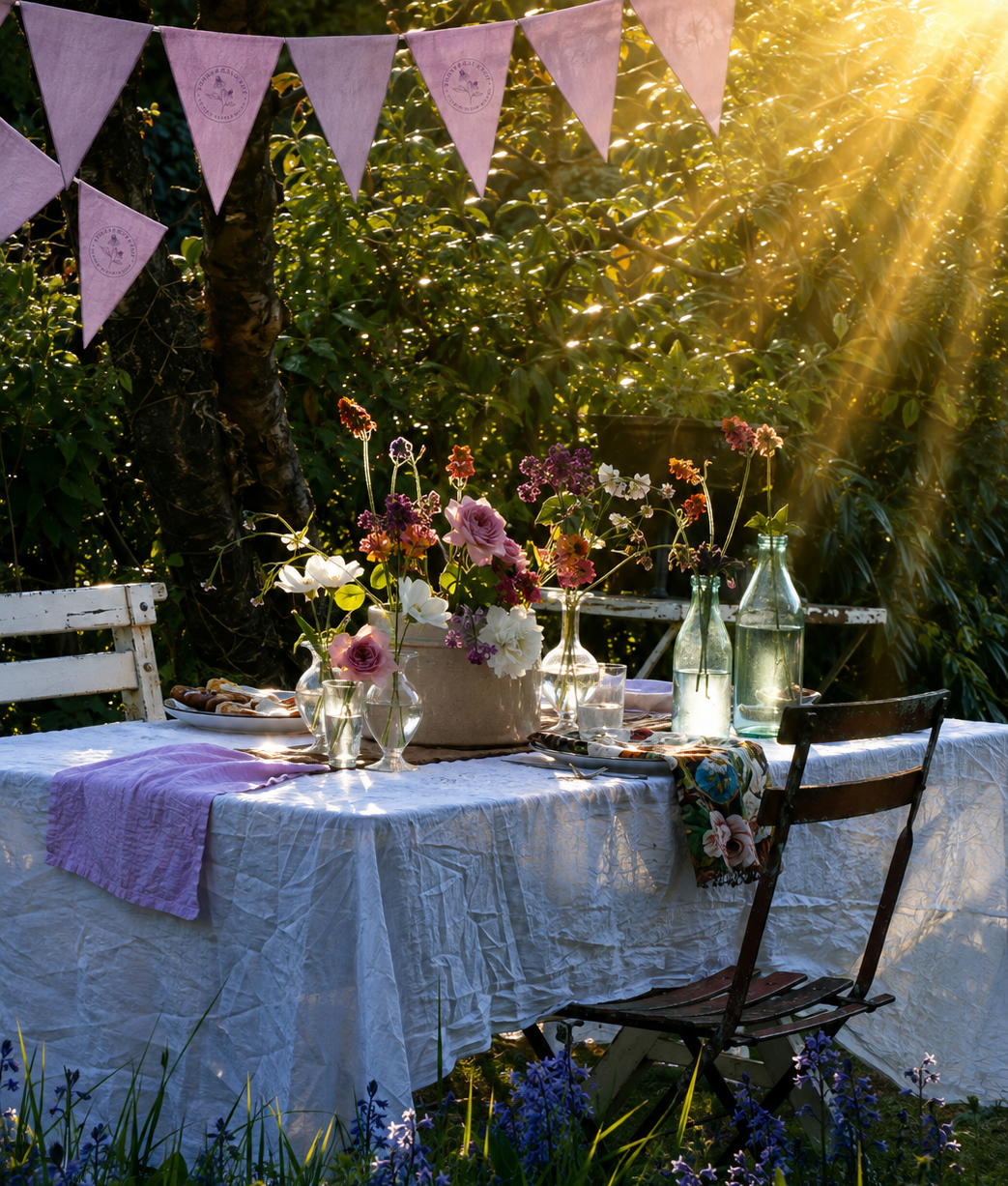
Through tablescapes for events, garden planning, garden coaching, planting advice and the creation of therapeutic outdoor spaces, The Wild Remedy can help people understand what their garden needs and what they themselves may need from it. This might involve restoring an overlooked corner, designing planting that supports calm and sensory wellbeing, creating a productive herbal garden, encouraging biodiversity or helping someone feel less overwhelmed by the space outside their home. Contact us here.
A garden does not have to be large or perfect to become restorative. It simply needs to be understood and thoughtfully tended. Sometimes people need a complete plan, while others need someone to walk beside them, help them see the potential already present and guide them through the process one season at a time.
That is the journey I want our garden work to offer. It is not about imposing a polished design that feels disconnected from the person living there. It is about creating spaces that become useful, beautiful, ecologically responsible and deeply personal.
The same approach shapes our nature-based workshops and gatherings.
If you are bringing together a group of friends, a workplace team, a school community, a charity group or an organisation and want to offer something more meaningful than a conventional activity, we can help create a therapeutic botanical craft or product-making session or compliment your own activity shaped around your group- reach out.
These experiences might include herbal self-care, candle making, nature printing, painting & botanicals, seasonal wreaths, pressed flowers, botanical products, planting, mindful garden activities or another nature-based practice developed especially for your event. The intention is always to create space for creativity, conversation and gentle connection through the natural world.
Ecotherapy does not always need to look clinical or complicated. Sometimes it is found in hands working with herbs, flowers, wax, soil and natural materials while people talk more freely than they expected to.
We also welcome enquiries for events, collaborations, installations, outdoor learning, wellbeing days and bespoke experiences. Many of the most meaningful things I have created began with one simple conversation, so if an idea is forming and you feel The Wild Remedy could help bring it to life, please get in touch.
Behind the scenes, I am also busy preparing The Wild Remedy for more local makers’ markets, farmers’ markets and thoughtfully chosen events. There is something particularly special about meeting people in person, sharing the story behind a product, hearing about their own relationship with plants and watching a conversation unfold across a market table.
After so much work has taken place quietly in gardens, kitchens, workshops and behind the website, I am excited for this next season of becoming more visible within local communities.
The brightest ideas are often the ones we grow together.
August Garden Notes
August is a month for observation as much as action.
Continue harvesting herbs during dry mornings when their aromatic oils are at their richest. August rewards observation more than intervention. Before reaching for the secateurs, spend time noticing which plants are still actively growing, which are conserving energy and which are preparing for the season ahead. Working with those natural rhythms often benefits both the garden and the wildlife that depends upon it.
The angle of the sun is already beginning to change, and even subtle differences in shade can influence how plants respond during these final weeks of summer. A position that received strong afternoon sun in June may behave quite differently as the season turns.
Notice which plants have coped well with the heat and which have struggled. Rather than viewing this as failure, treat it as useful climate information for future garden planning.
Some plants may need to be moved in autumn, while others may benefit from improved soil, mulching or the shelter of taller planting.
Allow some seed heads to remain for birds and insects. Keep water available during dry periods and resist the temptation to make every corner overly tidy. When the rain finally returns, consider collecting some of it for the weeks ahead. A simple water butt or rain barrel can become one of the most valuable additions to a garden, helping to conserve a precious resource while providing naturally softened water that many plants thrive on.
A garden that looks slightly untamed can still be carefully stewarded, and often provides far more shelter and food for wildlife.
This is also a good time to consider what you want your garden to offer you during the months ahead.
It may need to become a place of rest, a productive growing space, a haven for pollinators, an outdoor room for gathering or a therapeutic garden that invites you to spend more time outside. Begin by observing how you already use it and how you would like to feel when you step into it.
As for me, this season has also been a gentle reminder to care for the garden beneath my own skin. Alongside enjoying the sunshine respectfully, I have been returning to some familiar daily rituals: topping up my Chaga mushroom powder intake into my routine, sipping nettle and rosehip tea throughout the day and making time to slow down rather than simply pushing through the heat. The sun has often been described as 'the doctor in the sky', and while wisdom always calls us to respect its strength, I continue to believe there is something deeply restorative about learning to live in rhythm with the natural world rather than constantly shutting ourselves away from it.
Spend a little time simply watching where the light falls throughout the day. You may be surprised how much your garden has been trying to tell you all season.
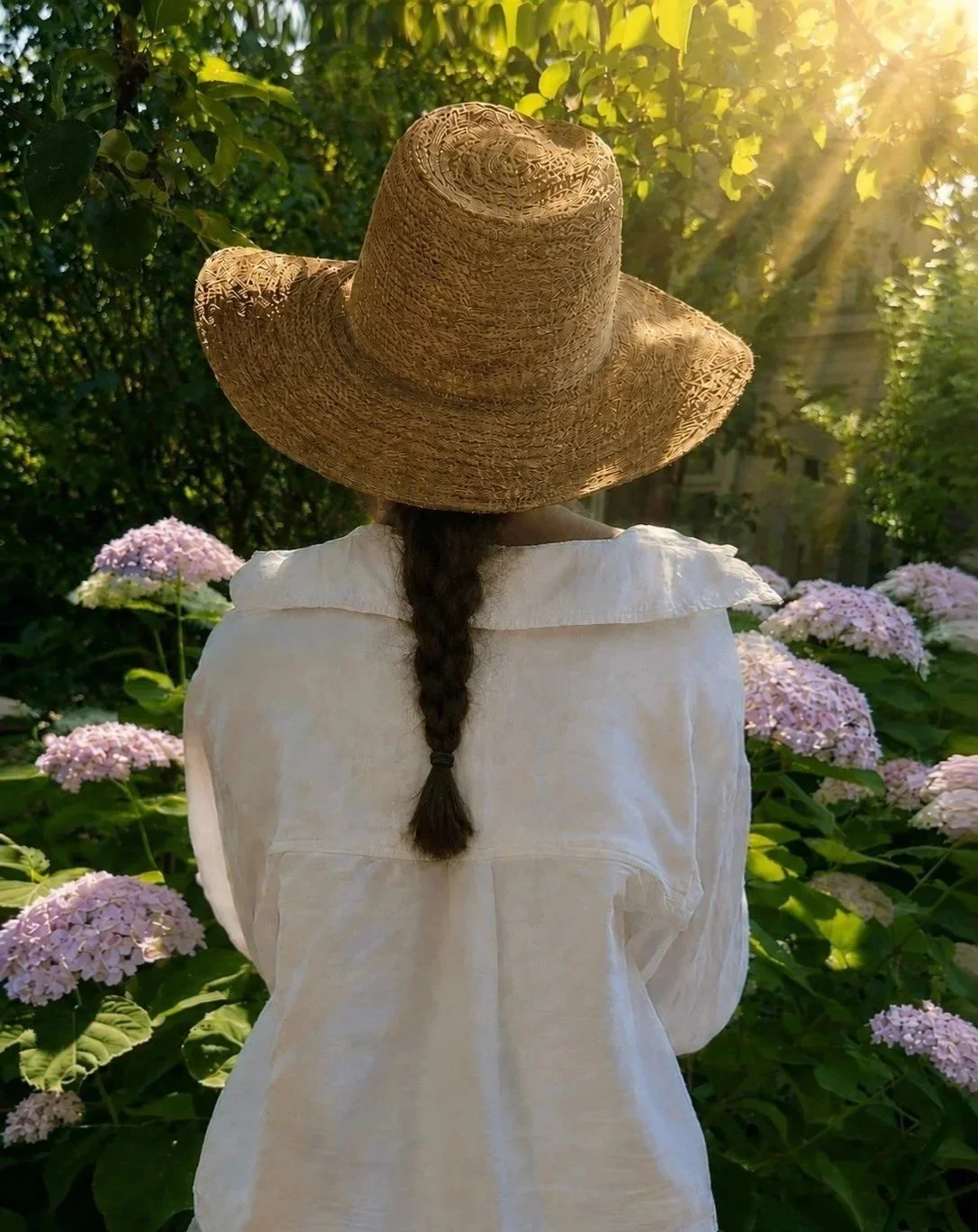
The garden is always paying attention, even when we forget to.
It never rushes into its next season.
Neither should we.
Stay safe people,
Bee
Founder, The Wild Remedy
Continuing the Journey
Further Reading
If this month’s journal has sparked your curiosity, these are some of the books and subjects that have shaped my own thinking and continue to inspire me.
The Holy Bible — New International Version and King James Version
The Light Eaters — Zoë Schlanger
The extraordinary hidden world of plant intelligence.
The Well Gardened Mind — Sue Stuart-Smith
Gardening, mental wellbeing and restoration.
Finding the Mother Tree — Suzanne Simard
The hidden relationships within forests.
The Secret Life of Trees — Colin Tudge
A thoughtful exploration of trees and ecology.
Why We Sleep — Matthew Walker
Sleep, circadian rhythms and restoration.
Research into chronobiology, circadian health and the influence of natural daylight on human physiology.
Psalm 19, Psalm 104, Genesis 1 and Psalm 119 for the recurring imagery of light, creation and wisdom that runs throughout Scripture.
Thank you for spending a little of your August with me.
May you find moments this month to step outside, lift your face towards the morning light, notice something you have never noticed before and remember that we rarely need the whole journey revealed.
Only enough light for the next step.